The Accidental Cartographers
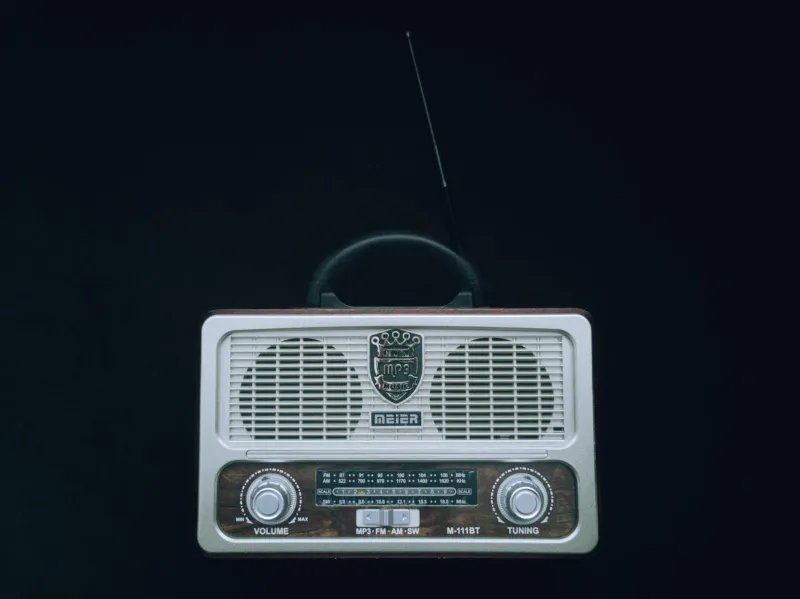
In the early decades of the 20th century, whilst proper scientists were still debating whether radio waves could possibly travel beyond the horizon, a peculiar breed of British enthusiast was already proving them wrong every evening. Armed with valve radios, copper aerials, and an inexhaustible supply of determination, amateur radio operators across the country were making contact with stations thousands of miles away — without quite understanding how.
These weren't your typical inventors. They were clerks from Croydon, shopkeepers from Sheffield, and retired postmen from Portsmouth, united by an almost mystical faith that voices could travel through thin air. What they lacked in formal training, they made up for with meticulous record-keeping and an obsession with the impossible.
Static as Science
Every night, in garden sheds and spare bedrooms across Britain, these radio pioneers would tune their sets, adjusting frequencies with the patience of monks copying manuscripts. They logged everything: signal strength, atmospheric conditions, time of day, even the weather. What seemed like glorified anorak behaviour was actually producing the most comprehensive dataset on radio wave propagation ever assembled.
The breakthrough came when someone noticed patterns in the chaos. Signals that bounced beautifully at dusk would vanish completely at noon. Frequencies that worked perfectly in winter became useless in summer. The atmosphere, it seemed, had layers — invisible shelves of charged particles that could reflect radio waves back to Earth like a cosmic mirror.
The Heaviside Revelation
Oliver Heaviside, a self-taught physicist from Camden, had theorised about an electrically conducting layer in the upper atmosphere as early as 1902. But it was the ham radio community who provided the evidence. Their obsessive signal-chasing had mapped what would later be called the ionosphere — a discovery that would prove fundamental to everything from international broadcasting to space exploration.
The irony wasn't lost on the scientific establishment. Whilst university physicists were still arguing about radio theory in lecture halls, amateur enthusiasts were already exploiting the ionosphere's properties to chat with stations in Australia and America. They'd turned the entire planet into their personal telephone network.
Beyond the Hobby
By the 1920s, professional researchers were queuing up to study the ham radio logs. The Royal Institution began hosting lectures on 'skip propagation' — the phenomenon that allowed radio waves to hopscotch around the globe by bouncing off the ionosphere. What had started as weekend tinkering was now reshaping our understanding of the upper atmosphere.
The practical applications were staggering. Weather forecasting improved dramatically once meteorologists understood how atmospheric conditions affected radio propagation. International communications became reliable rather than hit-and-miss. During the Second World War, the ionospheric knowledge pioneered by British amateurs would prove crucial for radar development and long-range navigation.
The Genius in the Garden Shed
There's something quintessentially British about this story. The combination of amateur enthusiasm, methodical record-keeping, and stubborn refusal to accept that something couldn't be done simply because experts said so. These radio pioneers embodied the same spirit that would later drive British computing, telecommunications, and space research.
Their legacy extends far beyond radio. The citizen science movement, satellite communications, and even the internet all owe a debt to those early experimenters who treated the atmosphere as their personal laboratory. GPS systems, mobile phones, and WiFi networks all depend on understanding how radio waves interact with the ionosphere — knowledge first mapped by enthusiasts in suburban garden sheds.
Waves of Innovation
Today's amateur radio community continues this tradition of accidental discovery. Modern ham operators are experimenting with digital modes, microwave communications, and even bouncing signals off the moon. Each breakthrough starts the same way: someone in a spare room wondering 'what if?' and refusing to accept that it can't be done.
The lesson isn't just about radio waves or atmospheric physics. It's about the power of passionate amateurs to push boundaries that professionals haven't even recognised yet. Sometimes the most profound discoveries come not from billion-pound research programmes, but from ordinary people with extraordinary curiosity and the patience to listen carefully to the static.