Innovation Begins at the Shed: Why Allotments Are Britain's Best R&D Department
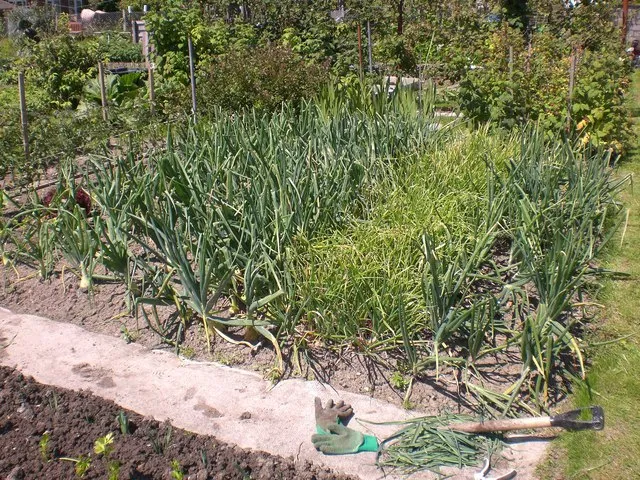
Photo: Dave Beynon, CC BY-SA 2.0, via Wikimedia Commons
Here's a proposal that won't survive contact with a consultancy deck: abolish every innovation summit in Whitehall and replace it with a walking tour of the nearest allotment site. Wander down the paths between the plots some Sunday morning and you'll find more genuine problem-solving per square metre than in most open-plan offices in Soho.
The Shed Is the Lab
Consider what actually happens on an allotment. Water comes from a standpipe and a rulebook that frowns on mains plumbing, so people improvise: guttering scavenged from skips feeding into IBC containers, gravity-fed drip lines made from old hosepipe, capillary matting salvaged from who knows where. Every system is bespoke, cheap, and the product of iteration — water it, watch it fail, rebuild it better next season. That's the engineering method with mud on its boots.
Then there's the soil itself. Allotment gardeners run continuous experiments on green manures, no-dig beds, companion planting and compost recipes, keeping mental (and sometimes actual) records over years. Professional agronomists would call it longitudinal field trial design. The plot-holder calls it "seeing what works this year."
Open Source Before Open Source
The seed-swap is the part that should really interest the tech world. Long before anyone coined the phrase "open-source community," allotment sites were running distributed knowledge networks: saved seeds passed along the paths with growing notes attached, varieties preserved that never appear in any catalogue, techniques traded freely across generations and, increasingly, across continents as new plot-holders arrive with their own traditions.
Nobody patents the runner bean. Nobody licenses the leek. The knowledge moves because it's useful, and it survives because it's shared. Entire companies have been built on weaker collaborative models.
What Whitehall Could Learn
The instinct in government is always to centralise: a strategy, a taskforce, a £250 million fund with a snappy acronym. But allotments suggest a different model for cultivating ingenuity — small plots, low stakes, high autonomy, and a community that shares failures as readily as triumphs. It's the exact environment startups try to manufacture with beanbags and free coffee, except here it comes with broad beans and an honesty box.
If the Treasury wants a national innovation strategy, it could do worse than fund the unglamorous infrastructure that makes this ecosystem run: water access, secure tenancies, tool libraries, and sites protected from developers who see a car park waiting to happen. The genius isn't locked in the shed. It's in the conditions that let a thousand small experiments happen at once.
A Modest Proposal, Mostly Sincere
This is not to say every allotment holder is a hidden Edison. Some are just growing excellent courgettes. But the system — decentralised, experimental, generous with knowledge, allergic to bureaucracy — is precisely what innovation gurus charge fortunes to simulate.
So here's the manifesto, in short: protect the plots, fund the standpipes, and send the ministers down the path with a notebook. The future, like the potatoes, is already in the ground.