The Revolution Will Be Domesticated
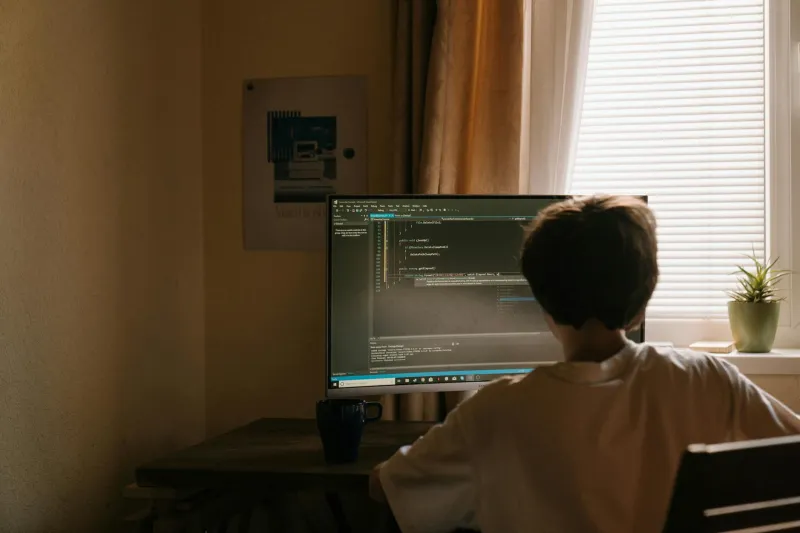
While America's tech titans were building empires in gleaming corporate campuses, Britain's digital revolution was unfolding in far more modest surroundings. Picture this: a teenager in Slough, hunched over a second-hand Amstrad CPC in his parents' spare room, unknowingly writing code that would one day help power the internet. It sounds like the setup to a particularly British comedy, but it's actually the origin story of our digital age.
The 1980s and 1990s witnessed something extraordinary happening in British homes. From council estates in Manchester to suburban semis in Surrey, a generation of young minds was tinkering with technology in ways that would fundamentally reshape how we connect, communicate, and compute. These weren't the carefully orchestrated breakthroughs of university laboratories or the well-funded ventures of corporate R&D departments. This was pure, obsessive creativity unleashed in the most unlikely of settings.
The Accidental Genius of Constraints
What made Britain's bedroom coders so innovative wasn't access to cutting-edge equipment – quite the opposite. The UK's home computing boom was built on making do with less. While their American counterparts had access to expensive workstations, British teenagers were performing miracles with machines that cost less than a decent bicycle.
The Sinclair ZX81, with its membrane keyboard and 1KB of RAM, forced programmers to think differently. Every byte mattered. Every line of code had to justify its existence. This constraint-driven creativity produced solutions that were elegant, efficient, and often years ahead of their time. When you're working with 48KB of memory, you don't waste space on unnecessary features – you innovate.
Take the story of a young programmer from Birmingham who, frustrated by the slow loading times of his favourite games, developed a compression algorithm that would later influence data transmission protocols used across the internet. He wasn't trying to change the world; he just wanted to load Jet Set Willy faster. But that's how genius often works – it emerges from the intersection of limitation and obsession.
The Great British Hacking Culture
Britain's approach to computing was fundamentally different from the corporate-driven model emerging in America. Here, the culture was more akin to the nation's long tradition of shed-based inventors and garage tinkerers. Computing wasn't seen as the exclusive domain of professionals; it was something you could explore, break, and rebuild in your own time.
The bedroom coder phenomenon was enabled by several uniquely British factors. The BBC's commitment to computer literacy, embodied in the BBC Micro and accompanying television programmes, created a generation that saw computing as accessible rather than intimidating. Meanwhile, the thriving magazine culture – publications like Your Computer and Popular Computing Weekly – created communities of knowledge-sharing that transcended geographical boundaries.
Young programmers would spend hours typing in code listings from magazines, but the real learning happened when they started modifying and improving upon what they'd found. A graphics routine here, a sound effect there – each modification was a small act of creative rebellion that collectively pushed the boundaries of what was possible.
The Unsung Heroes of Connectivity
Many of the protocols and standards that underpin today's internet can trace their lineage back to innovations born in British bedrooms. The packet-switching concepts that enable modern data transmission? Refined by teenagers who were trying to share files between their home computers via amateur radio. The compression algorithms that make streaming video possible? Evolved from techniques developed by young programmers trying to fit more data onto floppy disks.
One particularly remarkable story involves a group of friends from a comprehensive school in Leeds who, in 1987, created a bulletin board system that would eventually influence the design of early web servers. They weren't trying to build the future of human communication; they just wanted to share tips about their favourite computer games. But their innovations in user authentication, data organisation, and network protocols would echo through decades of subsequent development.
The Cultural Moment That Made Magic Possible
What created the conditions for this explosion of bedroom-based brilliance? It was a perfect storm of British pragmatism, technological accessibility, and cultural curiosity. The UK in the 1980s was a place where computing felt democratic rather than elitist. You didn't need a computer science degree or venture capital funding – you just needed curiosity and persistence.
The economic constraints of the era, paradoxically, fueled innovation. When you can't afford the latest hardware, you learn to make the most of what you have. When software is expensive, you learn to write your own. These limitations forced a generation to become creators rather than consumers, innovators rather than users.
Could Lightning Strike Twice?
As we look back on this remarkable period of British innovation, it's tempting to ask whether we could recreate those conditions today. The democratisation of technology continues – a Raspberry Pi today has more computing power than entire universities possessed in the 1980s. Online communities have replaced magazine listings as sources of shared knowledge and inspiration.
Yet something has changed. The bedroom coder of today faces different challenges: the complexity of modern systems, the dominance of established platforms, the sheer scale of existing codebases. Perhaps the next wave of genius will emerge not from bedrooms but from different kinds of constraints – environmental, social, or technological challenges that demand equally creative solutions.
The legacy of Britain's bedroom revolutionaries isn't just in the code they wrote or the protocols they pioneered. It's in the proof that genius doesn't require pedigree, that innovation flourishes under constraint, and that some of humanity's greatest leaps forward happen not in gleaming laboratories but in the most ordinary of spaces, driven by nothing more than curiosity and the stubborn refusal to accept that something can't be done.
In spare rooms across Britain, teenagers once rewrote the rules of what was possible. Their revolution didn't announce itself with fanfare or press releases. It simply worked, quietly and persistently, until one day the world woke up and realised that everything had changed.