Transmission Impossible
The MV Galaxy rocks gently in the North Sea, three miles off the Essex coast, while DJ Tony Prince spins another record that the BBC would never touch. It's 1965, and this converted cargo ship is technically in international waters, making it a floating embassy for musical revolution. What Prince doesn't realise as he cues up the next track is that he's not just playing records — he's rewiring the neural pathways of British culture.
 Photo: Tony Prince, via img.gta5-mods.com
Pirate radio wasn't just about playing banned music; it was an accidental laboratory for the attention economy. These rogue broadcasters, operating from boats, tower blocks, and converted caravans, stumbled upon the psychological principles that now govern Spotify algorithms and TikTok feeds. They understood intuitively what data scientists would later prove: that the secret to capturing human attention lies not in perfection, but in the beautiful unpredictability of human curation.
The Accidental Architects of Algorithm Culture
While the BBC's Light Programme doled out music in careful, committee-approved portions, pirate stations created something entirely new: the seamless flow state that defines modern listening. DJs like Emperor Rosko and Johnny Walker didn't just play songs; they crafted emotional journeys, understanding that the gap between tracks was as important as the music itself.
This wasn't just artistic intuition — it was revolutionary media science. The pirates discovered that listeners would stay tuned longer when surprised, when familiar tracks were juxtaposed with the unexpected. They were essentially creating the first recommendation engines, powered not by machine learning but by pure musical obsession.
Consider Radio Caroline's approach to programming. Instead of the rigid playlist structures favoured by legitimate stations, Caroline's DJs operated like human shuffle algorithms, following their instincts about what should come next. They understood that the perfect playlist isn't a list at all — it's a living, breathing organism that responds to mood, weather, and the mysterious alchemy of human attention.
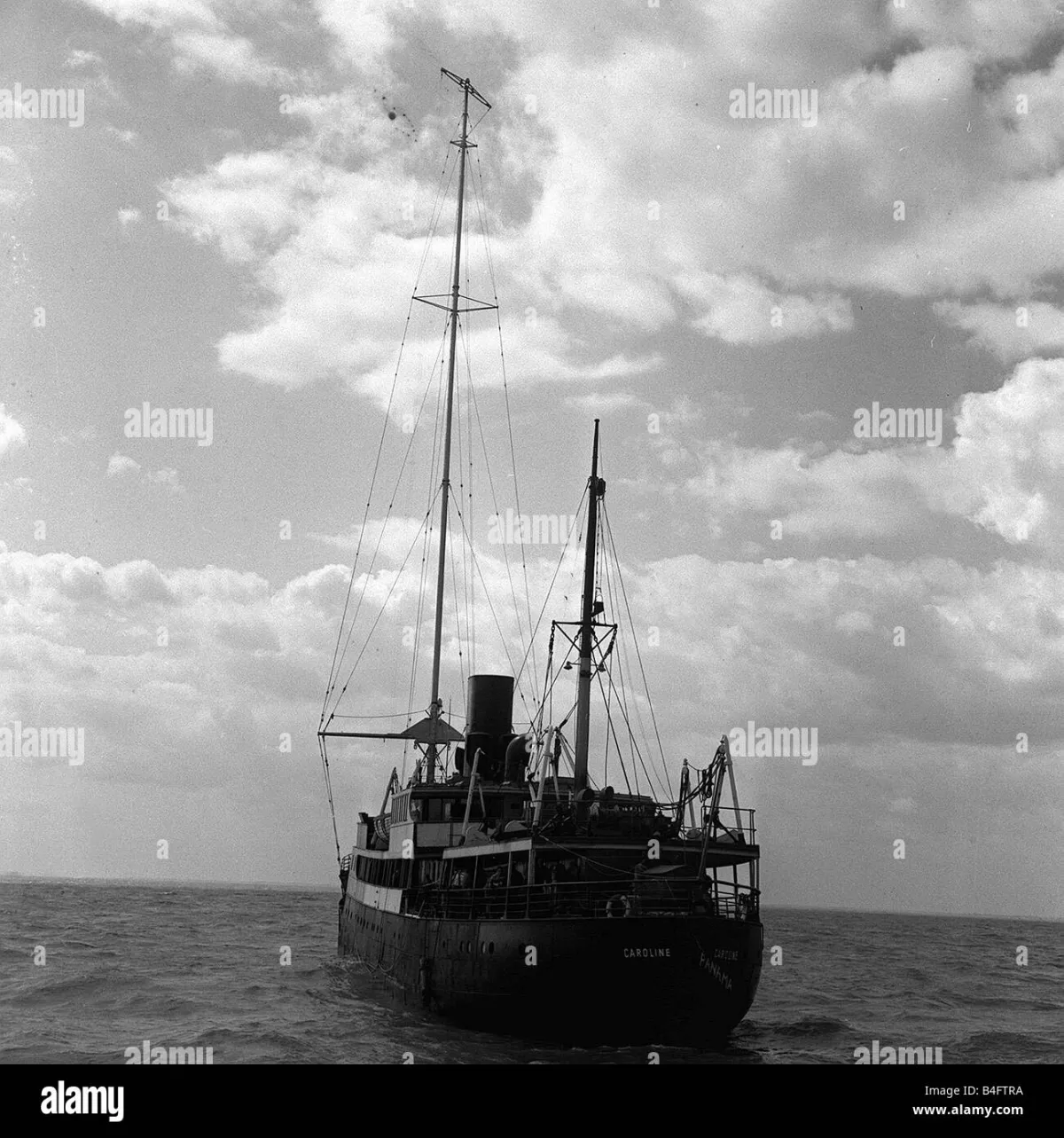 Photo: Radio Caroline, via c8.alamy.com
The Birth of Niche Broadcasting
Perhaps more significantly, pirate radio invented the concept of targeted broadcasting that now dominates digital media. While mainstream stations aimed for the broadest possible audience, pirates discovered the power of serving specific tribes. Radio Invicta's focus on soul and reggae, Kiss FM's dedication to house music, and Kool FM's jungle obsession weren't just programming choices — they were early experiments in algorithmic personalisation.
These stations proved that smaller, more passionate audiences were often more valuable than larger, indifferent ones. A thousand devoted listeners who would follow your recommendations anywhere were worth more than ten thousand casual browsers. It's a lesson that every successful podcast, YouTube channel, and streaming service has since absorbed.
The Technology of Rebellion
The technical constraints of pirate broadcasting forced innovations that presaged the digital revolution. Operating on shoestring budgets with second-hand equipment, pirates became masters of efficient content delivery. They had to grab attention immediately, hold it against interference and raids, and create maximum impact with minimal resources.
This necessity birthed the rapid-fire presentation style that would later define commercial radio and, eventually, social media. Pirates learned to compress maximum personality into minimum time, to create instant intimacy with invisible audiences, and to build communities around shared musical obsessions. Every Instagram story and TikTok video owes a debt to those early pirates who mastered the art of making every second count.
The Ripple Effect
The influence of pirate radio extends far beyond music. These stations were essentially beta-testing the entire creator economy, proving that passionate amateurs could outperform professional institutions when it came to understanding and serving specific audiences. They demonstrated that authenticity trumped polish, that personality mattered more than production values, and that breaking rules often led to breakthrough innovations.
When Kiss FM's Gordon Mac started mixing house tracks live on air in the late 1980s, he wasn't just creating entertainment — he was pioneering the DJ mix format that would become central to dance culture and, eventually, to how we consume all music. The seamless blend, the building energy, the careful selection of tracks that create an emotional arc — these techniques now govern everything from workout playlists to film soundtracks.
From Analogue Anarchy to Digital Democracy
The philosophical DNA of pirate radio runs straight through to today's media landscape. The idea that anyone with passion and basic equipment could become a broadcaster, that audiences would seek out authentic voices over corporate messaging, that the best content often came from the margins — these insights, born in cramped broadcast studios and floating transmitter ships, became the foundational principles of the internet age.
Modern streaming services, with their emphasis on mood-based playlists and algorithmic discovery, are essentially pirate radio scaled to infinity. The difference is that instead of one passionate DJ curating for thousands, we now have millions of users curating for themselves, guided by systems that learned their tricks from those original broadcasting rebels.
The Eternal Signal
The true genius of Britain's pirate radio movement wasn't just musical — it was philosophical. These broadcasters understood that culture isn't something handed down from above; it's something created in the spaces between official channels, in the gaps where authority fears to tread. They proved that the most powerful innovations often come not from boardrooms or research labs, but from passionate obsessives armed with basic technology and unlimited audacity.
In an age where algorithms increasingly determine what we hear, see, and think, there's something beautifully human about those early pirate stations. They reminded us that behind every great innovation is someone who simply refused to accept that things had to stay the way they were. The signal may have been illegal, but the message was pure genius: sometimes, to change the world, you just have to turn up the volume and hit broadcast.