When Madness Meets Method
Every May, hundreds of people gather on Cooper's Hill in Gloucestershire to watch grown adults hurl themselves down a near-vertical slope in pursuit of a wheel of Double Gloucester cheese. To outsiders, this looks like collective insanity. To locals, it's just Tuesday.
But what if Britain's most bonkers traditions aren't quite as mad as they appear? What if these seemingly barmy customs contain hidden strokes of genius that have helped them survive for centuries?
Time to investigate whether we're actually brilliant, or just really committed to looking ridiculous.
The Gloucestershire Cheese-Rolling Championships: Extreme Sports Before They Were Cool
Let's start with the obvious one. Cooper's Hill Cheese-Rolling looks like the sort of thing that should have been banned by health and safety officials decades ago. Participants regularly break bones, and the "winner" is simply whoever catches the cheese first – or more accurately, whoever tumbles down the hill with the least catastrophic injuries.
But here's the thing: this annual ritual might actually be a masterclass in community psychology. Dr. Robin Dunbar, the Oxford anthropologist famous for "Dunbar's Number," suggests that seemingly dangerous communal activities serve a crucial social function.
"Shared risk-taking creates incredibly strong social bonds," Dunbar explains. "When you're willing to potentially break your collarbone for the sake of tradition, you're sending a powerful signal about your commitment to the community."
The cheese-rolling isn't just about the cheese – it's about belonging. It's a way for the community to identify who's "properly local" and who's just passing through. Plus, it's probably the only sporting event where the main qualification is a complete disregard for personal safety.
Oxford Union Debates: The Art of Arguing About Nothing
Move from Gloucestershire to Oxford, and you'll encounter another peculiar British tradition: the Oxford Union's formal debates. Here, students dress up in black tie to argue passionately about motions like "This House Would Rather Be a Hammer Than a Nail" or "This House Believes That This House Has No Confidence in Itself."
To the uninitiated, this looks like elaborate intellectual masturbation. But behavioural scientists suggest these seemingly pointless debates serve a brilliant purpose: they teach participants to argue any position convincingly, regardless of their personal beliefs.
"It's essentially training in cognitive flexibility," says Dr. Jennifer Whitson, a professor of management at UCLA who has studied the Oxford system. "Students learn to see multiple perspectives and construct compelling arguments from any angle. It's like mental gymnastics."
This skill proves invaluable in later life, whether you're a barrister, politician, or just trying to convince your partner that yes, you do need another gadget for the kitchen.
Morris Dancing: The Original Flash Mob
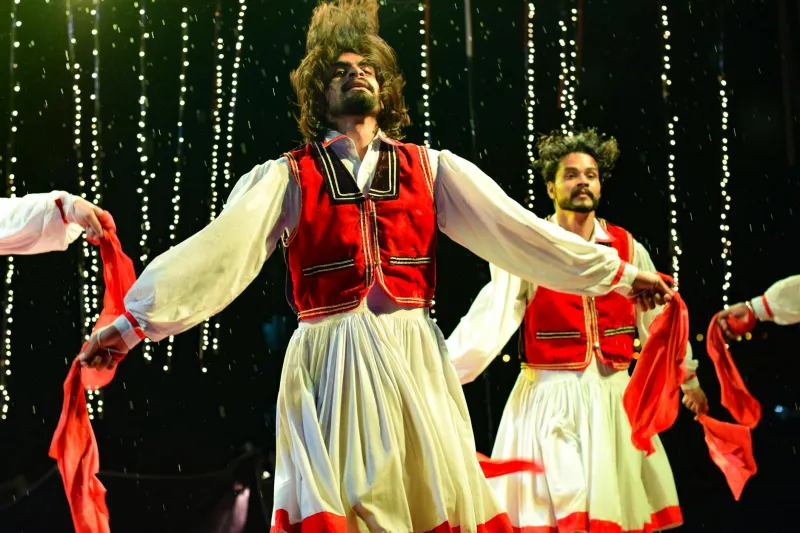
Morris dancing – the spectacle of men in white clothing, bells, and ribbons, waving handkerchiefs while hopping about – regularly tops lists of "Most Embarrassing British Traditions." But strip away the modern embarrassment, and you'll find something quite sophisticated.
Anthropologists now recognise Morris dancing as an early form of what we'd call "community theatre." The elaborate costumes, synchronised movements, and musical accompaniment create what researchers term "collective effervescence" – a shared emotional high that strengthens social bonds.
"It's basically the same psychological mechanism that makes people feel connected at concerts or sports matches," explains Dr. Bronwyn Tarr, who studies the evolution of music and dance at Oxford. "The Morris dancers were creating artificial tribes through synchronised movement – it's actually quite brilliant."
Plus, let's be honest: in an era before Netflix, Morris dancing was probably the most entertaining thing happening in most villages.
The Trooping of the Colour: Military Precision as Public Theatre
The annual Trooping of the Colour ceremony looks like the sort of elaborate pageantry that modern democracies should have outgrown. Hundreds of soldiers march in perfect formation, horses prance about, and everyone wears impractical hats while tourists take photos.
But this apparent anachronism actually demonstrates sophisticated understanding of what political scientists call "soft power." The ceremony projects British values – precision, tradition, stability – without saying a word about them.
"It's a masterclass in national branding," suggests Dr. Joseph Nye, who coined the term "soft power" at Harvard. "The British have figured out how to make military discipline look like art. Other countries spend millions on PR campaigns to achieve what Britain accomplishes with a few horses and some fancy uniforms."
The Queue: A Social Technology
Perhaps Britain's most famous cultural export isn't a tradition at all, but a social technology: the queue. While other cultures might push, shove, or use complex number systems, Britons have perfected the art of standing in an orderly line.
This isn't just politeness – it's genius. The queue system minimises conflict, reduces stress, and ensures fairness without requiring enforcement. It's a elegant solution to the problem of resource allocation that works so well, we barely notice it.
"The British queue is actually a remarkable piece of social engineering," notes Dr. Richard Larson, known as "Dr. Queue" at MIT. "It's self-organising, self-enforcing, and incredibly efficient. Most computer algorithms aren't that elegant."
The Method in Our Madness
So what's the pattern here? Britain's weirdest traditions often serve functions that weren't immediately obvious to their creators. They build community bonds, teach valuable skills, project cultural values, or solve social problems – all while looking completely barmy to outsiders.
Perhaps that's the real genius: we've figured out how to accomplish serious social and psychological work while pretending we're just mucking about. It's the cultural equivalent of hiding vegetables in a child's favourite meal.
The next time someone suggests that British customs are simply mad, remember the cheese-rollers building community through shared risk, the debaters learning cognitive flexibility through formal argument, and the Morris dancers creating tribal bonds through synchronised embarrassment.
We're not crazy – we're just really, really good at disguising our brilliance as complete lunacy. And honestly? That might be the most British thing of all.