The Games People Played
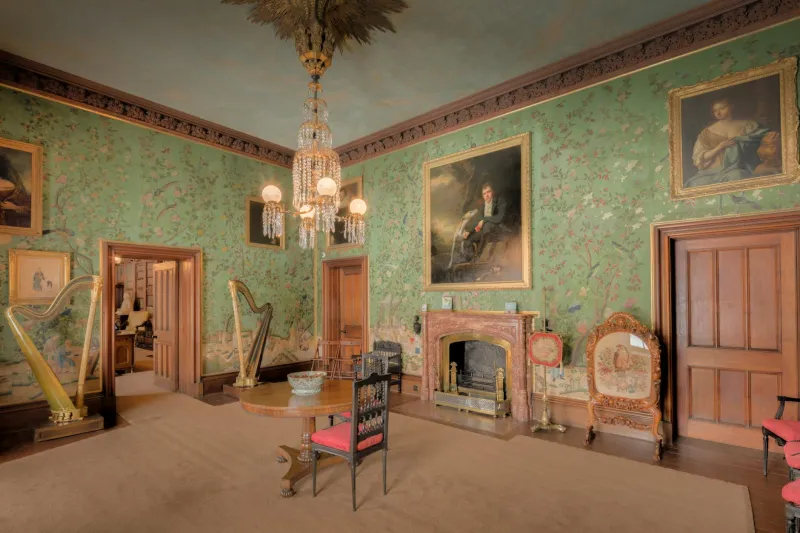
Picture a typical Victorian evening in a respectable British household. Gas lamps flicker across mahogany furniture, port circulates amongst the gentlemen, and someone inevitably suggests 'a little entertainment.' But this wasn't just idle after-dinner amusement — these parlour games were accidentally training an entire generation in the mathematical thinking that would later protect national secrets.
The Victorians were absolutely mad for puzzles. Cipher wheels, anagram competitions, and elaborate word-substitution games dominated social gatherings from Mayfair to Manchester. What seemed like harmless fun was actually developing the intellectual muscles that would prove crucial when Britain needed to protect its communications from enemy interception.
From Charades to Ciphers
The progression from parlour entertainment to serious cryptography wasn't as dramatic as you might expect. Many of the techniques that delighted drawing room audiences — frequency analysis, pattern recognition, systematic substitution — were identical to the methods used by professional code-breakers.
Take the Victorian obsession with acrostics. Creating poems where the first letter of each line spelled out a hidden message required exactly the same logical thinking needed to design secure ciphers. The difference was scale, not principle. A hostess arranging an elaborate puzzle evening was using the same mental toolkit as a government cryptographer protecting state dispatches.
The Mathematics of Merriment
What made British parlour games particularly significant was their mathematical sophistication. Unlike simple word-play, many Victorian puzzles required understanding of probability, combinatorics, and pattern analysis. Players learned to think systematically about substitution patterns, frequency distributions, and logical deduction.
The famous 'Playfair cipher,' used extensively in both World Wars, was actually developed by Charles Wheatstone for recreational purposes before being adopted by the military. Similarly, the 'Caesar cipher' — where each letter is replaced by another a fixed number of positions along the alphabet — was a staple of children's puzzle books long before it protected Roman military communications.
Bletchley's Parlour Connection
When Britain established its famous code-breaking operation at Bletchley Park during the Second World War, recruiters specifically sought people with a background in puzzles and games. Many of the most successful cryptographers had cut their teeth on crosswords, chess problems, and mathematical recreations rather than formal academic training.
The crossword puzzle, invented by a British-born journalist in 1913, became particularly important. The mental agility required to solve cryptic clues — understanding double meanings, spotting anagrams, recognising wordplay patterns — translated directly to code-breaking skills. The Times crossword became an unofficial recruitment test for intelligence services.
The Social Networks of Secrecy
Victorian puzzle culture created something even more valuable than individual skills: social networks of people who thought about problems in similar ways. Puzzle clubs, cipher societies, and mathematical recreation groups provided the informal connections that would later prove crucial during wartime recruitment drives.
These weren't just academic societies. They included clerks, schoolteachers, clergymen, and housewives — ordinary people whose hobby happened to involve the same intellectual processes needed for professional cryptography. When war broke out, Britain had a ready-made community of puzzle-solvers who could be rapidly trained for intelligence work.
Beyond Breaking Codes
The influence of Victorian puzzle culture extended far beyond cryptography. The systematic approach to problem-solving developed through parlour games influenced early computer programming, mathematical logic, and information theory. Many of the fundamental concepts in modern cybersecurity can be traced back to techniques first explored in drawing room entertainments.
Even today, recruitment for intelligence services often involves puzzle-solving tests that would be familiar to a Victorian parlour game enthusiast. The ability to spot patterns, think laterally, and persist with seemingly impossible problems remains as valuable now as it was when gas lamps lit London's drawing rooms.
The Puzzle Continues
The tradition hasn't disappeared — it's simply evolved. Modern escape rooms, online puzzle communities, and cryptographic challenges continue the same intellectual tradition that began around Victorian dinner tables. The difference is that today's puzzle enthusiasts know they're training skills that might prove professionally useful.
Britain's dominance in fields like cybersecurity, financial cryptography, and digital forensics owes much to this cultural heritage. A nation that spent its leisure time creating and solving elaborate puzzles naturally excelled when those same skills became strategically important.
The Genius of Play
Perhaps the most remarkable aspect of this story is how seriously the Victorians took their entertainment. They approached parlour games with the same intellectual rigour that modern researchers bring to academic problems. This wasn't dumbed-down amusement — it was serious fun that happened to train exactly the mental skills Britain would later need to protect its secrets.
The lesson resonates today: sometimes the most important innovations emerge not from focused research programmes, but from people playing seriously with ideas that fascinate them. The drawing rooms of Victorian Britain proved that the line between entertainment and education, between puzzles and professional skills, is far thinner than we might imagine.