When Passion Trumps Pedigree
Stroll through any British city and you'll find yourself surrounded by architectural marvels. Gothic spires pierce the sky, Victorian terraces march in perfect formation, and modernist towers stand as monuments to progress. What might surprise you is how many of these beloved buildings sprang from the minds of complete architectural amateurs—people who never set foot in a design school but possessed something far more valuable: unbridled creative vision.
The story of Britain's accidental architects is one of brilliant rule-breaking, where passionate outsiders consistently outshone their formally trained counterparts. These weren't just lucky flukes—they represent a fundamental truth about innovation that challenges our assumptions about expertise and creativity.
The Railway Revolutionary
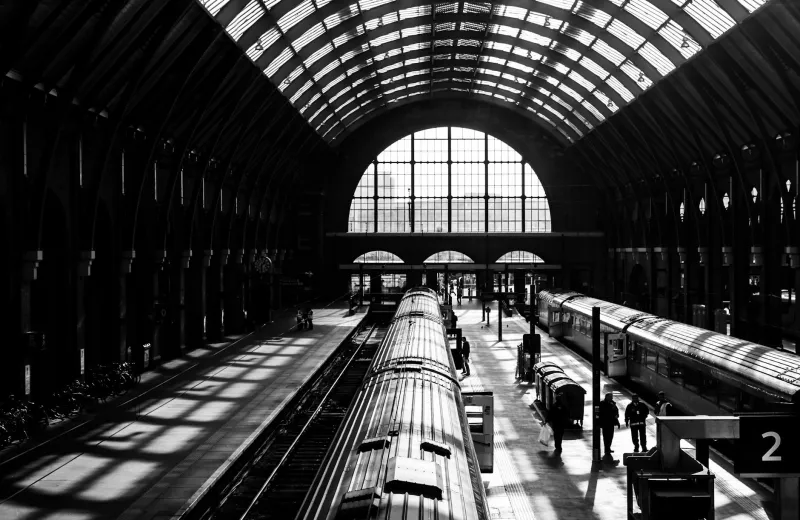
Consider Lewis Cubitt, the man behind London's King's Cross Station. When the Great Northern Railway needed a new terminus in 1852, they didn't turn to the era's architectural elite. Instead, they chose Cubitt, a civil engineer with zero formal architectural training. His background? Building roads and bridges.
What Cubitt lacked in architectural pedigree, he made up for with engineering brilliance and an eye for elegant simplicity. His design—two massive arched train sheds with a clock tower between them—was radical in its functional honesty. No Gothic frippery, no classical columns trying to disguise the building's industrial purpose. Just pure, beautiful engineering.
Today, King's Cross stands as one of London's most admired transport hubs, recently transformed into a gleaming gateway to Europe. Cubitt's amateur vision proved more enduring than countless 'proper' Victorian stations that have since been demolished.
The Self-Taught Visionary
Perhaps no amateur architect embodied this spirit more than John Nash, the man who gave London Regent Street and Regent's Park. Nash's architectural education consisted entirely of trial, error, and an insatiable appetite for beauty. After a failed stint as a builder left him bankrupt at 25, he retreated to Wales to reinvent himself.
There, surrounded by rolling hills and medieval ruins, Nash developed his distinctive style through pure experimentation. He studied buildings not in textbooks but by walking around them, sketching them, understanding how light and space could create emotion. When he returned to London, his unconventional approach caught the eye of the Prince Regent, who commissioned him to create a grand boulevard connecting the royal palaces.
Nash's Regent Street swept away medieval London's cramped chaos, replacing it with elegant curves and theatrical vistas. His amateur status became his greatest strength—unburdened by architectural orthodoxy, he could imagine the impossible and then build it.
The Gentleman Engineer's Gamble
Isambard Kingdom Brunel never called himself an architect, yet his buildings remain some of Britain's most photographed structures. Temple Meads Station in Bristol, with its mock-Tudor grandeur and soaring hammer-beam roof, looks like a medieval banqueting hall designed for steam trains. Which, in a way, it was.
Brunel's architectural adventures extended far beyond railway stations. His Clifton Suspension Bridge, spanning the Avon Gorge like a giant's harp string, began as a competition entry from a 24-year-old engineer with more confidence than experience. The established architects scoffed at his audacious design. Today, it's Bristol's most beloved landmark and a masterpiece of engineering poetry.
The Modern Amateur Renaissance
This tradition of brilliant amateurism didn't die with the Victorians. In the 1960s, Denys Lasdun—trained as an architect but working like an inspired amateur—created the National Theatre on London's South Bank. His brutalist masterpiece, with its geometric concrete terraces cascading towards the Thames, divided critics but captured the public imagination.
More recently, the London Eye emerged from the minds of Julia Barfield and David Marks, a husband-and-wife team whose radical Ferris wheel design won an open competition despite fierce opposition from architectural traditionalists. Their amateur approach—treating the wheel as sculpture rather than mere engineering—created London's most popular paid tourist attraction.
The Genius of Getting It Wrong
What unites these accidental architects isn't just their lack of formal training—it's their willingness to break rules they never learned in the first place. Trained architects often become trapped by precedent, designing buildings that tick all the right boxes while missing the spark of genuine innovation.
Amateurs, blissfully ignorant of these constraints, approach each project as a fresh puzzle to solve. They ask different questions: not 'How should this be done?' but 'How could this be done?' This shift in perspective often leads to breakthrough solutions that reshape entire disciplines.
Building Tomorrow's Landmarks
As Britain faces new challenges—climate change, urban density, social inequality—perhaps it's time to embrace our amateur architectural tradition once again. The next great British building might not emerge from a prestigious design studio but from the mind of a passionate outsider armed with nothing but vision, determination, and the courage to imagine something entirely new.
After all, in a world obsessed with credentials and qualifications, Britain's greatest buildings remind us that sometimes the most brilliant ideas come from those brave enough to build without permission—and talented enough to prove the experts wrong.