The Madness of Method
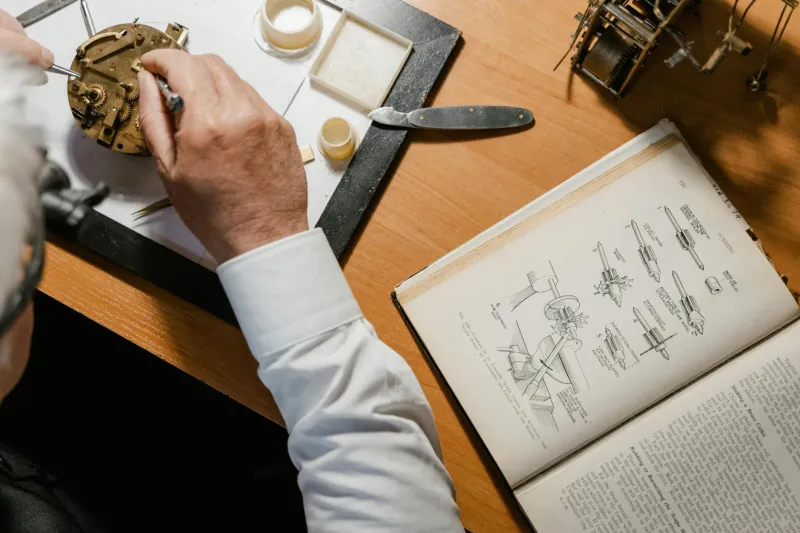
John Harrison was seventy-seven years old when he finally cracked the longitude problem that had stumped humanity for centuries. By then, he'd spent forty-five years of his life obsessing over a single question: how do you tell where you are on a featureless ocean? While the Royal Society's finest minds pursued complex astronomical solutions, this Yorkshire carpenter simply refused to accept that you couldn't build a clock accurate enough to work at sea.
 Photo: John Harrison, via thumbs.dreamstime.com
The establishment thought Harrison was barking mad. Clocks didn't work on ships — everyone knew that. The constant motion, temperature changes, and salt air made precision timekeeping impossible. Harrison's response was magnificently simple: then I'll build a better clock. And another. And another. For nearly half a century, he built increasingly sophisticated marine chronometers, each one a masterpiece of mechanical obsession.
Harrison represents a peculiarly British type of genius: the single-track mind that transforms stubborn refusal into world-changing innovation. These aren't the polymaths who dabble brilliantly across multiple fields. These are the beautiful obsessives who stake their entire existence on one impossible idea and simply will not let go.
The Zip Perfectionist
Whitcomb Judson invented the zip fastener in 1893, but it was Gideon Sundback who spent the next twenty years making it actually work. This Swedish-American engineer, working from a factory in Hoboken, became so obsessed with perfecting the zip that his colleagues worried about his sanity. He tried thousands of different tooth configurations, spring tensions, and slider mechanisms. His workshop was a graveyard of failed prototypes.
Meanwhile, in Sheffield, a British engineer named Martin Wintermantel was having his own zip obsession. Convinced that Sundback's design could be improved, Wintermantel spent thirty years — three decades — reimagining every component of the humble zipper. His neighbours thought he'd lost his mind, tinkering endlessly in his garden shed with tiny metal teeth and fabric strips.
Wintermantel's breakthrough came in 1963 when he finally created a zip that could withstand industrial washing and high temperatures. His design became the foundation for modern waterproof zips, space suit seals, and countless other applications. Thirty years of obsession had paid off, transforming everything from outdoor clothing to deep-sea diving equipment.
The Frequency Fighter
Amelia Earhart may have captured headlines, but Britain's aviation obsessive was Amy Johnson, who spent her entire adult life proving that flying was more than a rich man's hobby. Johnson wasn't content with simply learning to pilot aircraft — she became obsessed with understanding every mechanical detail, every weather pattern, every navigation technique that could make flight safer and more reliable.
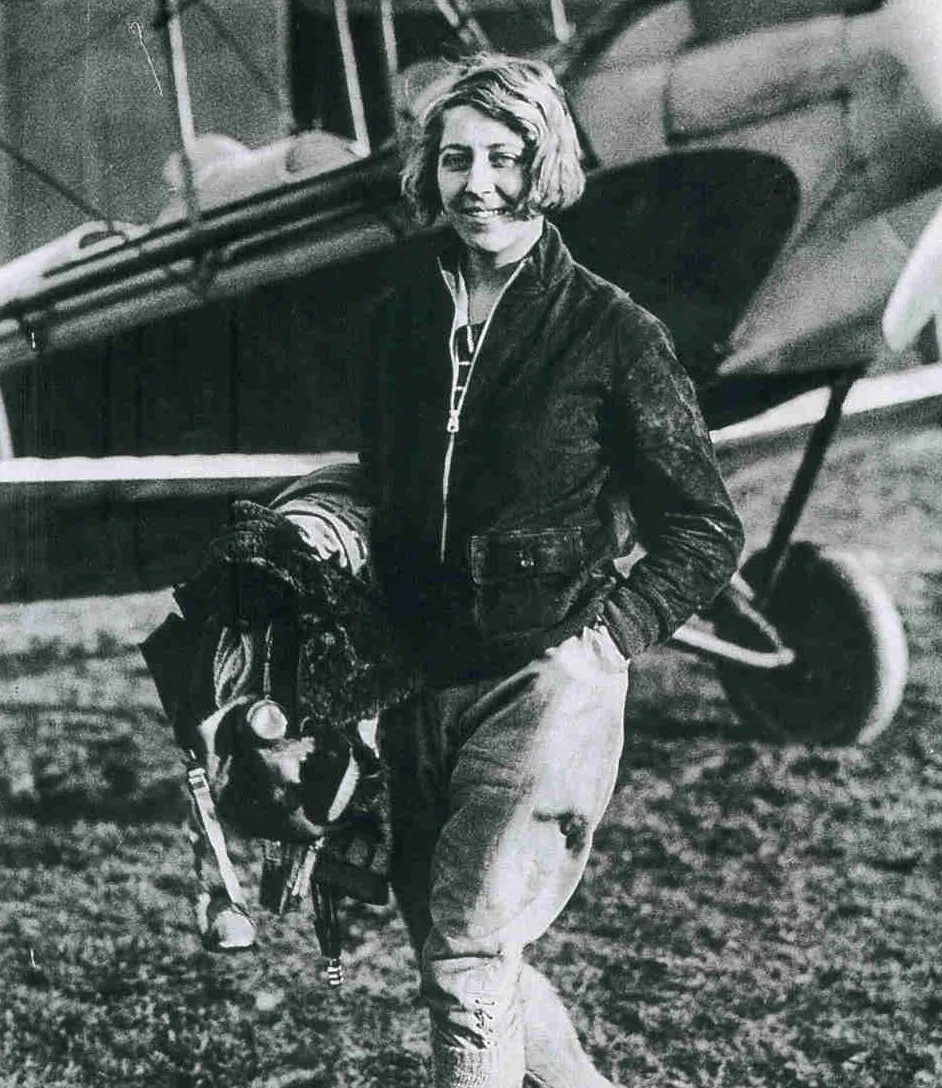 Photo: Amy Johnson, via www.aeroflight.co.uk
While other pilots focused on speed records and publicity stunts, Johnson spent years perfecting the mundane but crucial aspects of aviation: fuel efficiency, engine maintenance, and long-distance navigation. Her 1930 solo flight from England to Australia wasn't just about breaking records — it was about proving that careful preparation and obsessive attention to detail could make the impossible routine.
Johnson's legacy isn't just in aviation history; it's in the philosophy of systematic improvement that drives modern engineering. She proved that breakthrough innovations often come not from dramatic leaps, but from someone willing to spend years perfecting the details everyone else considers boring.
The Television Dreamer
John Logie Baird's path to television began with a simple obsession: transmitting moving images through space. While established scientists dismissed the idea as fantasy, Baird spent years in a cluttered laboratory, surrounded by spinning discs, photoelectric cells, and miles of wire. His early experiments were laughably crude — fuzzy images of ventriloquist dummies transmitted across a few feet of space.
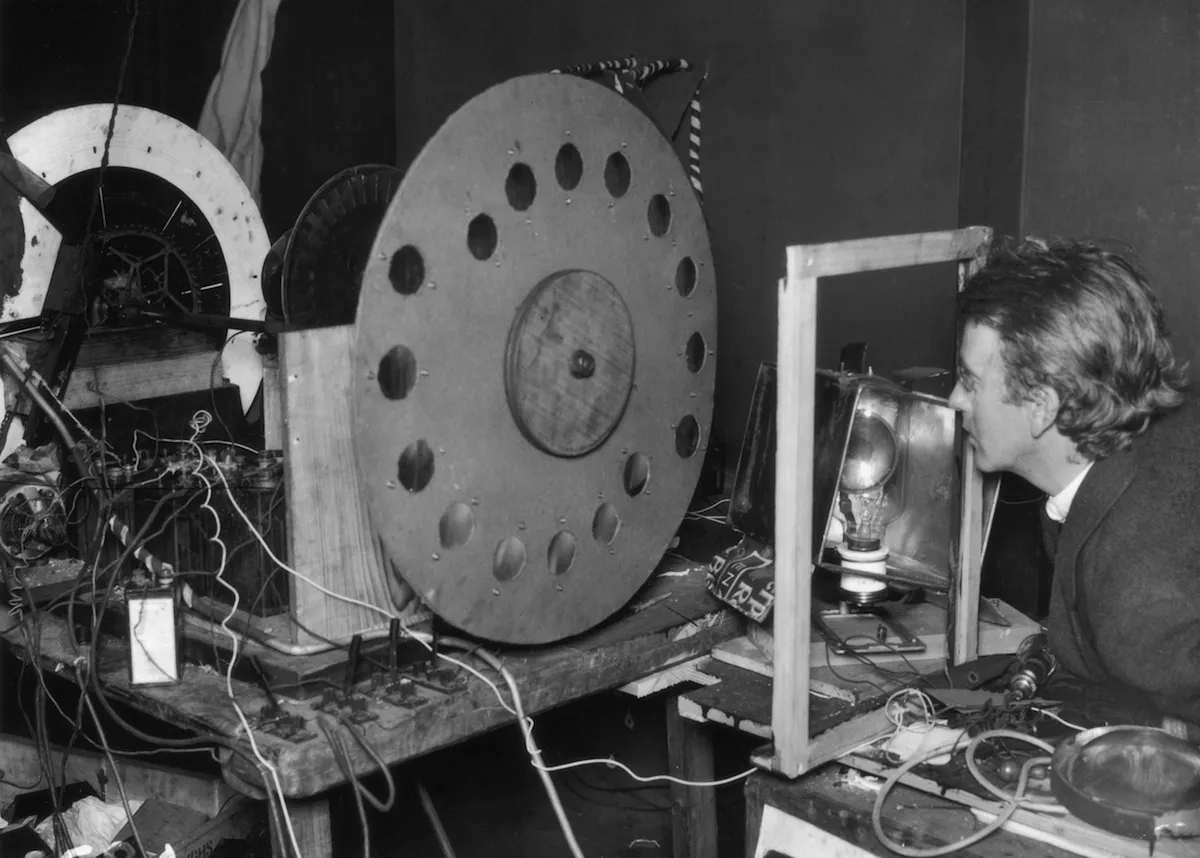 Photo: John Logie Baird, via api.time.com
But Baird possessed the essential quality of all great obsessives: he simply couldn't accept failure as permanent. Each setback became data for the next experiment. When his mechanical television system was eventually superseded by electronic alternatives, Baird didn't abandon his obsession — he pivoted to colour television, 3D broadcasting, and even early forms of video recording.
Baird's mechanical television system may have been a technological dead end, but his obsessive methodology — constant experimentation, meticulous documentation, refusal to accept conventional wisdom — became the template for modern research and development.
The Pattern Recognition
What united all these magnificent obsessives wasn't just stubbornness — it was a particular kind of pattern recognition that allowed them to see possibilities others missed. They understood intuitively that most "impossible" problems are actually systems problems, solvable through patient iteration and careful observation.
Harrison saw that longitude wasn't really about astronomy — it was about precision manufacturing. Johnson understood that aviation safety wasn't about pilot skill — it was about systematic preparation. Baird recognised that television wasn't about optics — it was about synchronisation. Each of them reframed supposedly unsolvable problems in terms they could actually address.
The Modern Obsessives
This tradition of beautiful obsession continues in contemporary Britain. James Dyson spent fifteen years and created 5,126 prototypes before perfecting his revolutionary vacuum cleaner design. Tim Berners-Lee spent years obsessing over information systems before creating the World Wide Web. Stephanie Shirley built a software empire by refusing to accept that programming was a man's job.
These modern obsessives share the same essential characteristic as their historical counterparts: they identify a single problem that everyone else considers solved (or unsolvable) and dedicate their lives to proving everyone wrong. They understand that true innovation often requires not just intelligence, but the kind of magnificent stubbornness that can sustain decades of apparent failure.
The Genius of Refusal
In our age of rapid iteration and pivoting, there's something almost radical about the single-track mind. These obsessives remind us that some problems can't be solved with hackathons or design sprints — they require the kind of deep, sustained attention that our hyperconnected world seems designed to prevent.
The beautiful obsessives prove that genius isn't always about having brilliant insights; sometimes it's about having one decent insight and refusing to let go until you've explored every possible implication. They show us that the most transformative innovations often come not from those who know when to quit, but from those who simply don't know how.
In a world that celebrates quick wins and instant gratification, Britain's magnificent obsessives stand as monuments to a different kind of intelligence: the beautiful stubbornness that turns impossible into inevitable, one patient experiment at a time.