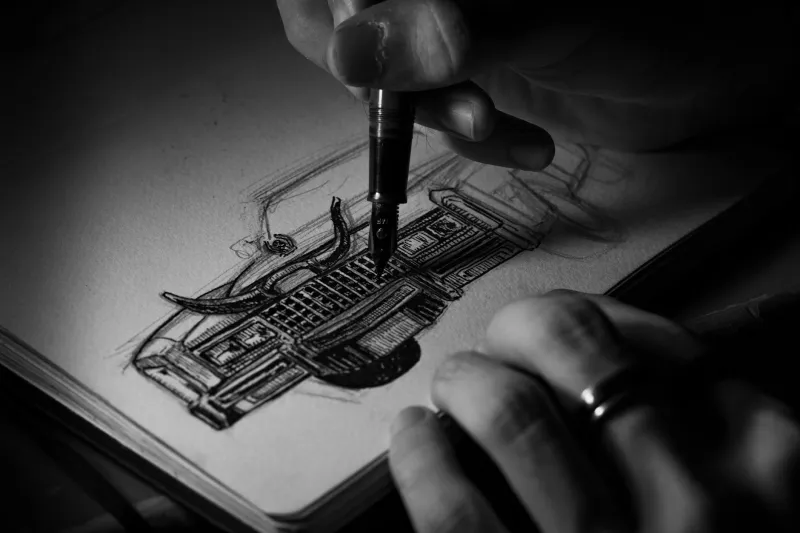
The Doodle That Predicted the Digital Age
In 1906, a cheeky cartoon in Punch magazine depicted a befuddled gentleman attempting to operate what the artist called a "tele-phonoscope" — a device that would allow him to see his dinner guests before they arrived. The Victorian readership chuckled at this preposterous contraption, dismissing it as typical satirical nonsense. Yet that throwaway sketch bore an uncanny resemblance to what we now call video calling, arriving nearly a century before Skype made the artist's jest a mundane reality.
This wasn't mere coincidence. Britain's satirical illustrators, freed from the constraints of scientific respectability, repeatedly sketched technologies that formal academia wouldn't dare propose. Their creative licence to mock and exaggerate paradoxically granted them a peculiar form of prescience.
The Permission to Be Preposterous
Satire operates in a unique creative space where the impossible becomes permissible. When Punch cartoonists drew mechanical servants tidying drawing rooms in the 1890s, they weren't attempting serious technological forecasting — they were poking fun at Victorian domesticity. Yet their robotic butlers bore striking similarities to the automated household devices that would emerge decades later.
Similarly, when Eagle comic's Dan Dare adventures depicted personal communicators and space tourism in the 1950s, these weren't considered serious predictions. They were simply dramatic devices to propel exciting storylines. But strip artist Frank Hampson's meticulous attention to technical detail meant his fictional gadgets often contained kernels of genuine engineering insight.
Beyond the Punchline: Technical Intuition in Disguise
What distinguished Britain's satirical artists wasn't just their imagination, but their surprisingly sophisticated understanding of contemporary technology. Many Punch contributors moved in scientific circles, attending Royal Institution lectures and mixing with the era's leading inventors. Their cartoons reflected genuine technical knowledge, filtered through a lens of playful irreverence.
Take Heath Robinson, whose name became synonymous with absurdly complicated contraptions. His elaborate mechanical drawings weren't pure fantasy — they demonstrated a deep understanding of Victorian engineering principles, simply pushed to their logical extremes. When he drew automated breakfast-making devices in 1914, he was extrapolating genuine trends in domestic mechanisation.
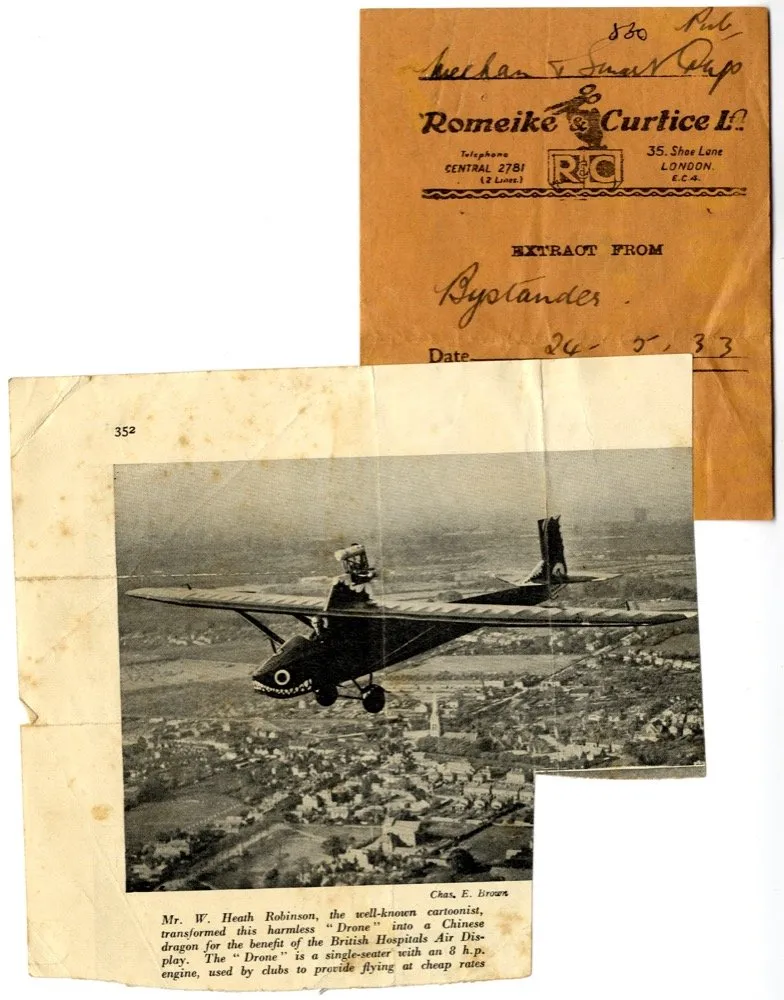 Photo: Heath Robinson, via www.heathrobinsonmuseum.org
The Eagle Has Landed (Before NASA)
Perhaps nowhere was this prophetic quality more pronounced than in post-war children's comics. Eagle magazine's technical illustrators, many of them trained engineers themselves, created detailed cutaway drawings of spacecraft, underwater cities, and personal flying machines. Their work combined scientific rigour with unfettered imagination.
Frank Hampson's depictions of space travel in Dan Dare stories proved remarkably prescient. His multi-stage rockets, orbital rendezvous procedures, and even the social dynamics of space exploration anticipated many aspects of the actual space programme. NASA engineers would later acknowledge the influence of such comic strip visions on their own thinking.
The Serious Business of Silly Pictures
This tradition of prophetic illustration wasn't confined to humour magazines and children's comics. Political cartoonists like David Low and Gerald Scarfe often embedded technological speculation within their social commentary. Low's 1930s cartoons about mechanised warfare proved grimly accurate, while Scarfe's 1960s depictions of media saturation anticipated our current digital overwhelm.
The key was their position outside formal institutional constraints. While engineers faced professional pressures to propose only "realistic" solutions, and scientists needed peer review approval, cartoonists could experiment freely with impossible ideas. This creative freedom often led them to solutions that conventional thinking couldn't reach.
Drawing Lessons for Today's Innovators
Contemporary innovation culture might learn from these satirical prophets. Today's tech development often follows rigid methodologies — market research, focus groups, iterative prototyping. But Britain's cartoon visionaries suggest that playful, unrestricted imagination might be equally valuable.
Silicon Valley's most successful innovations often began as seemingly frivolous ideas. Social networking emerged from university students wanting to rate each other's attractiveness. Video sharing started as a simple way to share party footage. Perhaps we need more satirical thinking in our serious institutions.
The Future in Four Panels
Looking at today's editorial cartoons and webcomics, one wonders which current impossibilities might become tomorrow's mundane realities. Are today's satirical depictions of artificial intelligence, climate engineering, or space colonisation equally prescient?
The lesson from Britain's prophetic doodlers isn't that artists are mystical fortune-tellers. Rather, it's that creative freedom — the licence to imagine without immediate practical constraints — often reveals possibilities that methodical analysis misses. Sometimes the most serious thinking happens when we're not taking ourselves too seriously.
In a world increasingly dominated by algorithmic prediction and data-driven forecasting, perhaps we should pay more attention to the people still sketching impossible things in the margins of respectability. They might just be drawing our future.