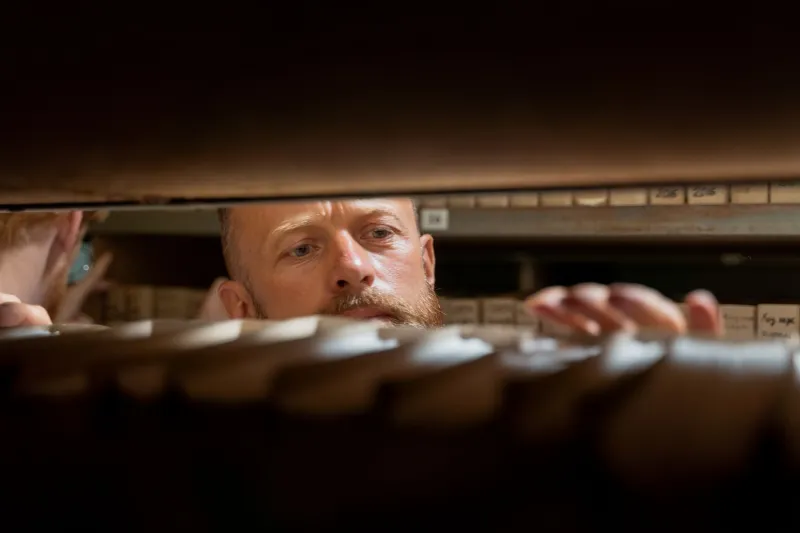
Sleepless Genius: The British Insomniacs Who Built Tomorrow

The Night Shift of History
Whilst most of Britain sleeps soundly, history's greatest breakthroughs have often emerged from the restless minds of chronic insomniacs. Picture Charles Dickens pacing London's gaslit streets at 3am, his imagination spinning tales that would define Victorian literature. Or consider the early computing pioneers hunched over primitive machines in Cambridge laboratories, their caffeine-fueled nights laying the groundwork for our digital age.
These weren't isolated incidents of sleep-deprived brilliance. Britain's culture of determined, obsessive late-night dedication has quietly shaped the modern world in ways we're only beginning to understand.
When Darkness Sparks Light
The connection between sleeplessness and creativity isn't merely anecdotal. Modern neuroscience reveals that the hypnagogic state—that twilight zone between wakefulness and sleep—can unlock unconventional thinking patterns. During these liminal hours, the brain's usual logical constraints relax, allowing seemingly unrelated concepts to collide and merge.
Charles Darwin, plagued by chronic insomnia throughout his life, often made his most significant theoretical leaps during restless nights at Down House. His notebooks reveal breakthrough moments occurring in the small hours, when his mind wandered freely through the implications of natural selection. The very structure of On the Origin of Species bears the hallmarks of nocturnal contemplation—meandering yet methodical, building arguments through patient accumulation rather than sudden revelation.
The Midnight Oil Revolution
Britain's industrial revolution wasn't just powered by steam and coal—it ran on sleepless nights. James Watt's improvements to the steam engine emerged from countless hours tinkering in his workshop after dark, when the distractions of daily commerce couldn't intrude upon his concentration. His famous separate condenser breakthrough reportedly came during a particularly restless night in 1765, as he wrestled with thermodynamic principles that had puzzled engineers for decades.
Similarly, Michael Faraday's groundbreaking experiments with electromagnetism often extended well past midnight in the Royal Institution's basement laboratory. His detailed journals document how electromagnetic induction revealed itself during a particularly intensive all-night session in 1831, when exhaustion had stripped away his preconceptions about how electricity and magnetism might interact.
Literary Insomniacs and Their Nocturnal Muses
British literature owes an enormous debt to sleepless writers whose midnight wanderings birthed iconic works. Beyond Dickens' famous nocturnal perambulations through London, consider Virginia Woolf's stream-of-consciousness innovations, often crafted during insomniac episodes at Monk's House in Sussex. Her revolutionary narrative techniques emerged from those disorienting late-night hours when linear thought dissolves into something more fluid and associative.
Dylan Thomas composed many of his most celebrated poems during sleepless nights in his Laugharne writing shed, fueled by cigarettes and the hypnotic rhythm of Welsh coastal winds. His dense, musical verses reflect the strange clarity that can emerge from extreme fatigue—a state where language becomes more plastic and meanings multiply.
Computing's Caffeine-Fueled Genesis
The digital revolution has particularly deep roots in Britain's culture of nocturnal innovation. At Bletchley Park, the codebreakers who cracked Enigma worked in shifts around the clock, but many made their crucial breakthroughs during voluntary overtime in the small hours. Alan Turing's conceptual leap toward artificial intelligence reportedly crystallised during a sleepless night in 1950, as he pondered whether machines might truly think.
Decades later, British computer scientists continued this tradition. At Cambridge University's Computer Laboratory, the development of early networking protocols often progressed through marathon coding sessions that stretched from dusk to dawn. The collaborative, packet-switching technologies that would eventually become the internet emerged from these caffeine-fueled gatherings of brilliant misfits who preferred working when the rest of the world had switched off.
The Neuroscience of Nocturnal Innovation
Modern sleep research suggests there's genuine science behind these midnight eureka moments. When we're severely tired, the brain's prefrontal cortex—responsible for logical, linear thinking—begins to relax its grip on consciousness. This allows the more associative, pattern-seeking regions to take greater control, potentially leading to those "aha!" moments that seem to come from nowhere.
Dr. Russell Foster at Oxford University's Sleep and Circadian Neuroscience Institute notes that many creative individuals naturally gravitate toward later chronotypes—they're genuinely more alert and innovative during evening hours. This biological tendency, combined with Britain's cultural acceptance of eccentric working patterns, may have created perfect conditions for nocturnal breakthroughs.
The Dark Side of Sleepless Success
Yet we mustn't romanticise sleep deprivation. Many of history's greatest insomniacs paid dearly for their restless dedication. Darwin's chronic illness, Woolf's mental health struggles, and Thomas's early death all suggest that burning the midnight oil exacts a significant personal cost.
Contemporary research confirms that whilst short-term sleep deprivation might occasionally spark creative insights, chronic insomnia generally impairs cognitive function, emotional regulation, and physical health. The challenge lies in harvesting those rare moments of sleep-deprived brilliance without sacrificing long-term wellbeing.
Britain's Restless Legacy
Perhaps there's something uniquely British about this tradition of stubborn, nocturnal persistence. Our cultural celebration of the determined amateur, the obsessive hobbyist, and the brilliant eccentric has created space for minds that operate on unconventional schedules. From Dickens wandering Victorian London to modern programmers debugging code at 4am, Britain's insomniacs have consistently pushed the boundaries of what's possible.
Their legacy reminds us that innovation often emerges not from well-rested, systematic thinking, but from the strange clarity that can arise when exhaustion strips away our usual mental constraints. In those liminal hours between day and night, Britain's sleepless pioneers glimpsed tomorrow—and had the stubborn persistence to make it real.