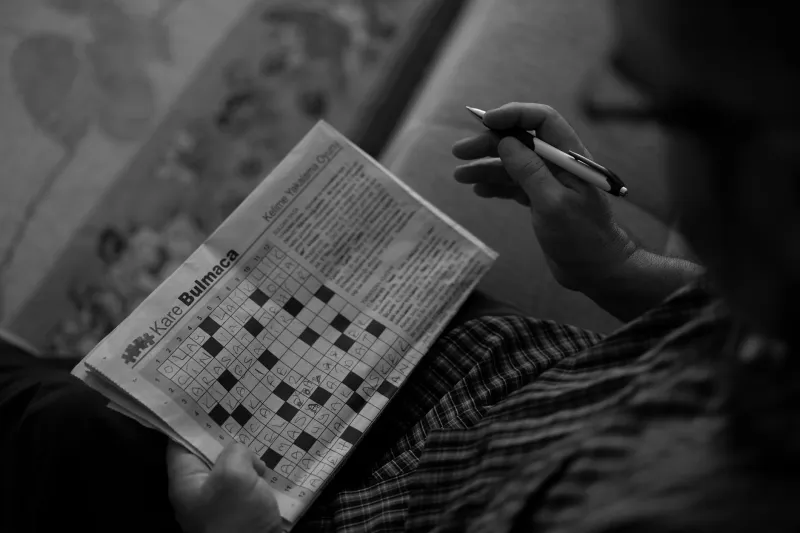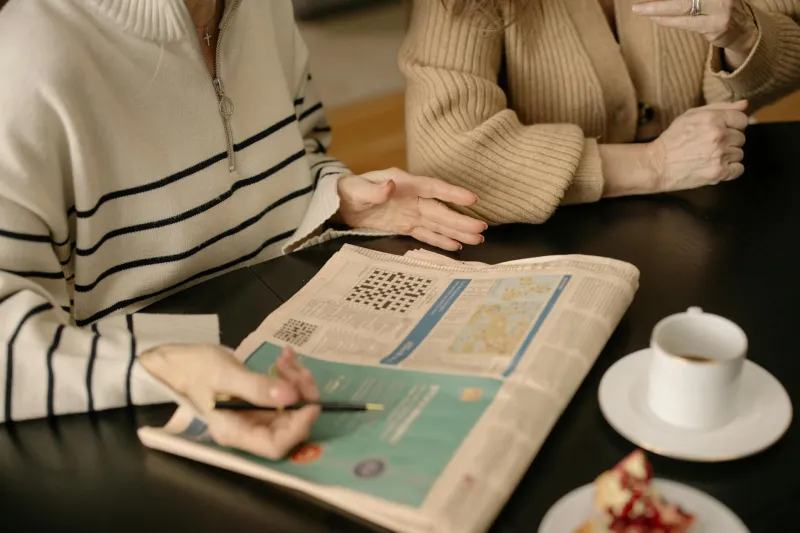
The Sunday Morning Revolution
Every weekend, millions of Britons arm themselves with biros and brew a proper cuppa, ready to tackle the cryptic crossword. What they don't realise is that this quintessentially British ritual has been shaping the future of artificial intelligence for nearly a century.
Whilst Silicon Valley tech bros were still in nappies, Britain's puzzle enthusiasts were unknowingly developing the cognitive frameworks that would later become the backbone of natural language processing. The mental gymnastics required to decode "Butterfly's home in the wet, say (7)" – HABITAT, if you're wondering – mirrors the pattern recognition that drives today's most sophisticated AI systems.
From Huts to Algorithms
The connection begins at Bletchley Park, where Britain's finest minds gathered during World War II to crack enemy codes. These weren't your typical mathematicians and linguists – they were crossword champions, puzzle addicts, and lateral thinking mavens recruited specifically for their ability to spot patterns in chaos.
Alan Colman, a former Bletchley veteran who later worked on early computer systems, once remarked: "The Enigma machine was just a very complicated crossword clue. Once you understood the setter's mind, the rest followed naturally."
These wartime puzzle-solvers didn't just win the war – they laid the groundwork for computational thinking. Their approach to problem-solving, honed through years of wrestling with cryptic clues, became the template for how machines might one day parse human language.
The Grammar of Genius
Cryptic crosswords operate on a unique logic that's surprisingly similar to how modern AI processes language. Every clue contains multiple layers of meaning: the surface reading, the cryptic instruction, and the hidden definition. This multi-layered interpretation is precisely what neural networks attempt to replicate when understanding human communication.
Consider the classic clue structure: "Anagram indicator + jumbled letters + definition." This isn't far from how transformer models break down sentences into tokens, analyse relationships, and reconstruct meaning. The crossword setter's art of misdirection – making solvers think laterally rather than literally – taught an entire generation to approach problems from unexpected angles.
The Bletchley Legacy Lives On
Fast-forward to the 1980s, and many of Britain's early AI researchers had one thing in common: they were crossword obsessives. Dr Margaret Boden at Sussex University, whose work on computational creativity influenced generations of AI development, credits her puzzle-solving background with teaching her to "think like a machine whilst remaining thoroughly human."
The influence runs deeper than individual researchers. British AI development has always favoured elegant, indirect solutions over brute-force approaches – a philosophy lifted straight from the crossword constructor's playbook. Why use ten words when a clever bit of wordplay can achieve the same result?
Teaching Machines to Play with Words
Today's large language models like GPT and BERT operate on principles that would be familiar to any cryptic crossword enthusiast. They look for patterns, make lateral connections, and generate responses based on contextual clues rather than rigid rules.
The breakthrough moment came when researchers realised that language isn't just about grammar and vocabulary – it's about understanding the game being played. Crosswords taught us that meaning often hides in plain sight, disguised by clever misdirection. This insight proved crucial in developing AI systems that could handle ambiguity, irony, and the beautiful messiness of human communication.
Beyond the Grid
The crossword influence extends into unexpected corners of modern technology. Voice assistants that parse "Play something cheerful" into the right Spotify playlist are using pattern recognition techniques pioneered by puzzle enthusiasts. Autocorrect systems that understand you meant "definitely" when you typed "defiantly" employ the same lateral thinking that helps solve "Certainly mad about flies (10)."
Even machine translation owes a debt to cryptic crosswords. The challenge of converting "Il pleut des cordes" into "It's raining cats and dogs" requires exactly the kind of creative interpretation that crossword solvers master every Sunday morning.
The Future Looks Puzzling
As AI continues to evolve, the crossword connection grows stronger rather than weaker. The latest developments in artificial general intelligence focus on teaching machines to make creative leaps, to understand context and subtext, and to play with language in ways that feel genuinely human.
These are precisely the skills that Britain's crossword culture has been cultivating for generations. Our national obsession with wordplay hasn't just entertained us through countless Sunday mornings – it's helped birth the age of artificial intelligence.
The Genius Wave Continues
So next time you're wrestling with a particularly fiendish cryptic clue, remember: you're not just solving a puzzle, you're participating in a grand tradition that helped teach machines to think. Every "Aha!" moment, every lateral leap from confusion to clarity, echoes the breakthroughs that made modern AI possible.
Britain's genius has always been its ability to find profound insights in seemingly trivial pursuits. Our crossword obsession proves the point perfectly – sometimes the most revolutionary ideas emerge not from grand laboratories, but from the humble intersection of Sunday papers, strong tea, and minds that refuse to think in straight lines.
The wave of innovation continues to break, and it tastes distinctly of Earl Grey and satisfied smugness at finally cracking 7 Down.