The Revolution Will Be Photocopied
In a grimy community centre in Manchester, circa 1979, sixteen-year-old Sarah Chen feeds another sheet through the temperamental Xerox machine. The result is smudged, slightly crooked, and absolutely perfect — another page of "Static Shock," her hand-assembled zine that reaches exactly forty-seven readers across the UK. What Sarah doesn't know is that she's crafting the DNA of digital culture, one stapled pamphlet at a time.
While the establishment dismissed zines as teenage nonsense, these photocopied publications were quietly revolutionising how information moved through society. The cut-and-paste aesthetic that defined zine culture? It became the visual language of early websites. The network of readers who traded zines through the post? They were beta-testing social media decades before Mark Zuckerberg was born.
From Bedroom Floors to Browser Windows
The parallels between zine culture and digital media are so precise they feel prophetic. Consider the hyperlink — that fundamental unit of internet architecture. Zine makers were already creating their own version through obsessive cross-referencing, mail-order catalogues, and "shout-outs" to other publications. They understood instinctively that information wanted to be connected, layered, and endlessly referenced.
Take "Sniffin' Glue," the legendary punk zine that launched from a Deptford bedsit in 1976. Editor Mark Perry didn't just review bands; he created a web of connections between musicians, venues, record shops, and readers. Each issue functioned like a primitive social network, mapping the invisible relationships that held Britain's underground music scene together.
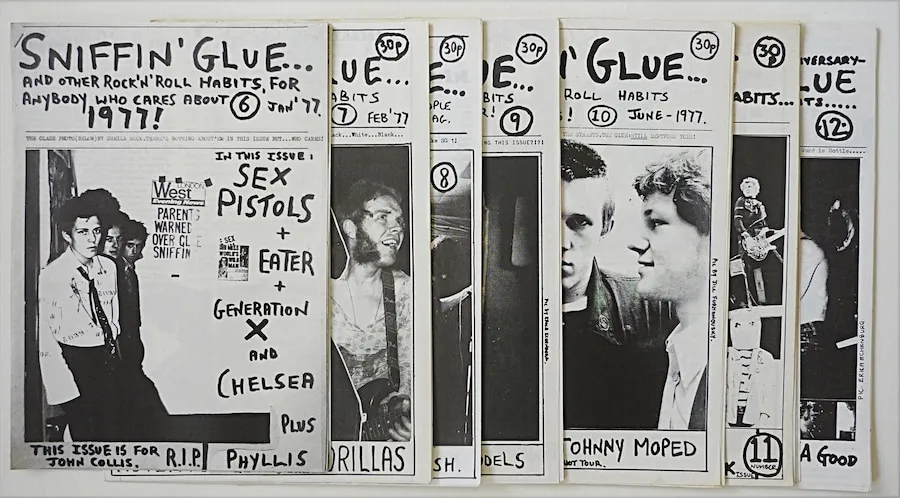 Photo: Mark Perry, via images-prod.dazeddigital.com
The zine makers were also pioneers of user-generated content, though they'd have laughed at such corporate terminology. Every issue invited readers to contribute — letters, artwork, reviews, rants. The boundary between producer and consumer dissolved completely, creating what media theorists now recognise as the participatory culture that defines the internet age.
The Accidental Algorithms
Perhaps most remarkably, zine culture anticipated the recommendation systems that now govern our digital lives. Without sophisticated databases or machine learning, zine editors became human algorithms, curating and filtering information for their micro-communities. They developed an intuitive understanding of what would resonate with their audience, creating the personalised media experiences we now take for granted.
In Glasgow, "Ripped & Torn" editor Tony Moon spent hours crafting each issue's flow — balancing aggressive political commentary with obscure record reviews and surreal artwork. He was essentially programming an experience, creating the kind of carefully curated journey through information that Instagram and TikTok would later automate.
The Network Effect
The zine distribution network was a masterclass in viral marketing before the term existed. Publications spread through record shops, gig venues, and mail-order catalogues, creating a decentralised system that resembled nothing so much as the peer-to-peer networks that would later transform file sharing.
Zine makers understood that content without community was worthless. They built elaborate ecosystems around their publications — pen pal networks, fanzine fairs, compilation tapes. These weren't just marketing strategies; they were early experiments in building online communities, complete with their own etiquette, hierarchies, and cultural codes.
The Long Echo
When Tim Berners-Lee was developing the World Wide Web at CERN, he probably wasn't thinking about the photocopied manifestos circulating through Britain's youth clubs. But the philosophy that drove zine culture — information should be free, everyone can be a publisher, communities form around shared obsessions — became the foundational principles of internet culture.
Today's influencers, bloggers, and content creators are essentially zine makers with better technology. The same DIY spirit that drove teenagers to spend their pocket money on photocopying costs now fuels the creator economy. The difference is scale, not substance.
The Beautiful Rebellion
What made Britain's zine culture particularly potent was its beautiful bloody-mindedness. These weren't just hobbyists; they were true believers who understood that controlling the means of communication meant controlling the future. They rejected the gatekeepers of traditional media and built their own alternative universe, one stapled pamphlet at a time.
In an age where algorithms determine what we see and corporate platforms control how we communicate, there's something gloriously pure about those early zine makers. They proved that the most powerful innovations often come not from Silicon Valley boardrooms, but from teenagers with big ideas and access to a photocopier.
The genius wave that would eventually become the internet didn't start with computer scientists or venture capitalists. It started with kids who refused to wait for permission to change the world.