Press 1 for Reinvention: The Quiet Second Life of Britain's Red Phone Boxes
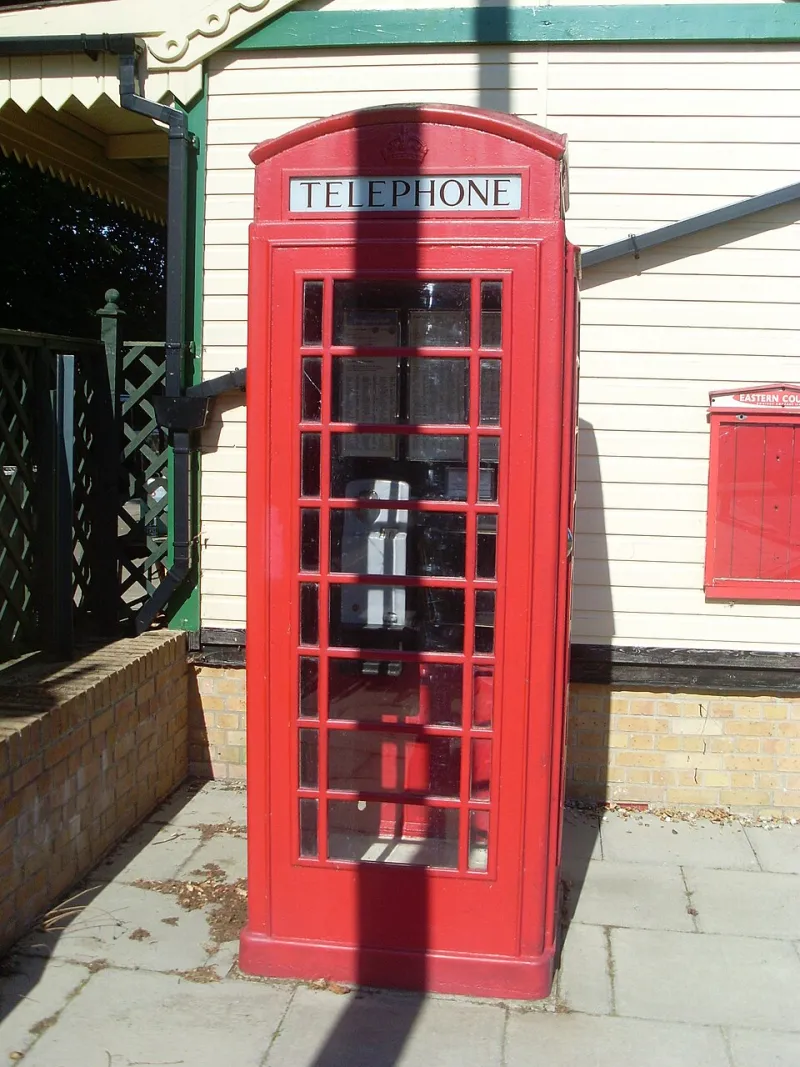
Photo: David Hillas , CC BY-SA 2.0, via Wikimedia Commons
A design classic has a problem the rest of us would envy: it outlives its job. The red telephone box was drawn up to hold a phone, a phone book, and a person with a reasonable amount of patience. It did that beautifully for decades. Then the mobile phone arrived, the queues disappeared, and Britain was left with a few thousand cast-iron wardrobes standing on village greens with no obvious purpose.
What happened next is the interesting bit.
The brief nobody wrote down
Somewhere along the line, a very British design brief emerged, unspoken and unofficial: you have a small, listed, unheated, dimly lit box with no power, no plumbing and a door that doesn't quite shut. Make it useful.
Constraints like that would send most product teams into a fortnight of workshops. Communities simply got on with it. Across the country, boxes began reappearing with their glass panels intact and their insides full of something completely different: paperbacks, seeds, tinned food, art, socks, batteries, spare dog poo bags.
The £1 advert
The mechanism behind much of this is unglamorous. Phone operators have long run an adoption scheme letting parish councils, charities and community groups take on a redundant kiosk for a token sum — often a pound — on the understanding that they maintain it and keep it looking like itself. The result is one of the cheapest regeneration programmes in the country, paid for largely in volunteer time and a bit of paint.
There is something pleasing about the economics. A piece of infrastructure that once existed to sell a service has been turned into a piece of infrastructure that exists because people want it to. The asset didn't change. The purpose did.
The defibrillator is the killer app
If you had to nominate the most successful second act, it would be the heart boxes. Hundreds of kiosks now hold publicly accessible defibrillators, often in villages where the nearest ambulance station is a twenty-minute drive and the nearest shop closed years ago.
The phone box suits the job almost too well: recognisable, lit, weatherproof, on a patch of ground that already belongs to the community, and positioned where it was always placed — at the centre of things. What was once the place you called for help has become the place that helps, no call required.
Books, seeds and other small revolutions
Beyond that, the variety is a portrait of what communities actually need. Mini libraries, obviously. Seed exchanges for gardeners who distrust the price of a packet of beans. Swap boxes for jigsaws and wellies and children's books. Tiny galleries. Coffee hatches. Noticeboards that have outgrown the church porch. One box in a coastal town has spent years as a sort of unofficial tourist information point, staffed by whoever happens to be passing.
What connects them is scale. A phone box holds about as much as a generous cupboard, which means nobody can over-commit. You cannot build a bureaucracy inside one. You can only do one small thing well.
Constraint as a creative engine
This is the lesson that keeps turning up whenever you look closely at British reinvention. When you are given an awkward, prescribed shape, you stop designing the shape and start designing the use. The box cannot change, so the idea has to.
That is the opposite of how most innovation is sold — as a blank canvas, a greenfield site, a blue-sky thinking session. Real creativity usually turns up when the sky is a small cast-iron rectangle with K6 on it.
Not every box makes it
It would be dishonest to pretend this is a national triumph. Plenty of kiosks sit empty, fading, with a broken pane and a laminated sign that has been rained on since 2019. Adoption takes effort, insurance, a keyholder and someone willing to check the defibrillator's pads every week. Listed status protects the look of a box, not the goodwill behind it.
Some have been converted by private buyers into shower cubicles, coffee stands and, inevitably, tiny pubs. Others were removed entirely before anyone noticed. The pattern is familiar: the reuse happens where there is a person with a drill and an unreasonable amount of civic feeling, and it doesn't happen where there isn't.
What a phone box knows about the future
In 2026, most discussions about innovation are about replacement — rip out, upgrade, start again. The phone box suggests the opposite approach might be the more interesting one: take the thing you already have, accept its limitations, and ask what else it could be for.
It is not a grand strategy. It is a scheme that runs on a pound, a paintbrush and somebody's Tuesday evening. But it has produced something no new-build could: a piece of the past still doing work in the present, with a defibrillator where the coin slot used to be.