Mud Under the Fingernails: The Amateur Gardeners Who Quietly Transformed British Farming
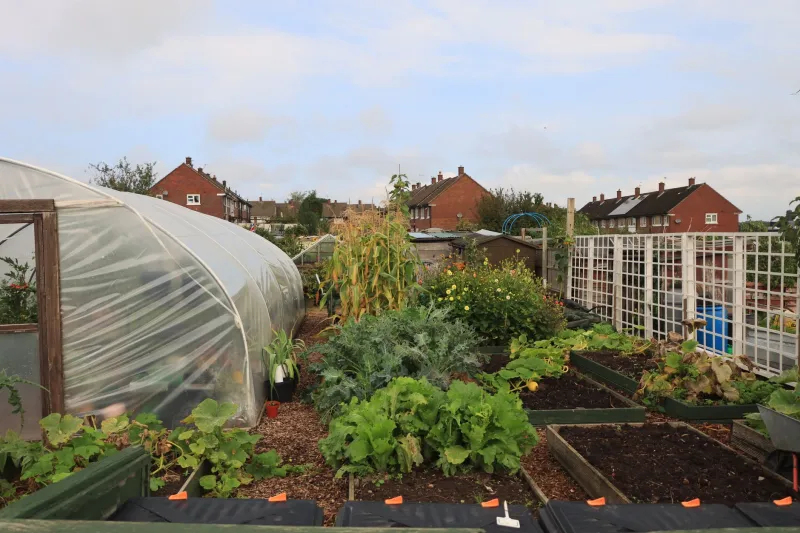
The allotment is one of Britain's great democratic institutions. Twelve square metres of slightly waterlogged clay, a shed that leans at an angle that defies structural logic, a kettle that takes eleven minutes to boil, and absolute freedom to try whatever you fancy. For centuries, that freedom — unfettered by academic protocol, grant applications, or the weight of institutional expectation — has quietly produced some of the most significant advances in British plant science and agricultural practice.
Nobody planned it that way, of course. That's rather the point.
The Curious Case of the Weekend Experimenter
Formal plant science in Britain has an impressive pedigree. Kew Gardens, the Royal Horticultural Society, and a long tradition of university-based botanical research have all made genuine contributions to our understanding of the plant world. But alongside that official story runs a parallel one — scruffier, less documented, and in many ways more interesting.
The amateur gardener operates under a completely different set of conditions to the professional researcher. There are no hypotheses to defend, no funding bodies to satisfy, no peer reviewers to appease. There is only the bed, the seed, and the question: what happens if I try this?
This willingness to experiment without a safety net has, repeatedly throughout British history, produced results that the formal institutions later scrambled to explain and codify.
Allotment Alchemy: The Soil Experimenters
The allotment movement, which grew substantially in Britain during the nineteenth century and exploded during both World Wars, created an extraordinary distributed laboratory. Across the country, hundreds of thousands of ordinary people were growing food under varying conditions, trying different techniques, and — crucially — talking to each other about what worked.
This informal knowledge network predated the internet by a century and a half, but it functioned with surprising efficiency. Word passed between plot-holders at the gate, in the pub on a Friday evening, through letters to gardening columns in local papers. Techniques that worked spread organically. Failures were noted and avoided.
Out of this collective tinkering came genuine innovation. Companion planting practices that are now supported by rigorous scientific evidence were being observed and recorded by allotment holders long before academics arrived to measure the mechanisms. Soil conditioning methods — composting approaches, the use of specific organic matter, crop rotation patterns — were refined through decades of empirical observation by people who had no idea they were doing science.
They were just trying to grow better leeks.
Thomas Andrew Knight and the Gentlemen Growers
If there's one figure who exemplifies the tradition of the gifted amateur in British horticulture, it's Thomas Andrew Knight. A Herefordshire landowner working at the turn of the nineteenth century, Knight was not a professional scientist in any formal sense. He was a curious, obsessive grower who happened to have land, time, and an unusually rigorous mind.
His experiments with plant hybridisation, conducted in his garden and orchards over decades, preceded Mendel's famous work and touched on principles of heredity that wouldn't be properly theorised for another generation. His work on fruit tree cultivation transformed British orchard management. His observations on the relationship between plant growth and gravity were genuinely novel.
And he did most of it because he found it interesting, not because anyone told him to.
Knight represents a type that recurs throughout British horticultural history: the educated amateur with enough independence to follow curiosity wherever it led, unconstrained by institutional fashion or the need to produce publishable results on a schedule.
The Women the History Books Missed
Any honest account of Britain's amateur horticultural tradition has to reckon with the fact that a significant portion of its most important contributors were women whose work was systematically undercredited.
Victorian and Edwardian women, often barred from formal scientific institutions, channelled considerable intellectual energy into gardening and plant study. The detailed observational records kept by women in country houses, vicarage gardens, and suburban plots across Britain represent an enormous body of data that was rarely acknowledged as scientific work at the time — but was.
Gertrude Jekyll is the name most people know, celebrated for her design philosophy. But behind Jekyll were hundreds of unnamed women who spent decades carefully noting which varieties thrived in which conditions, experimenting with soil amendments, and developing an intimate understanding of plant behaviour that no laboratory could replicate. Their knowledge fed into the mainstream of British horticulture without attribution, absorbed into practice without acknowledgment of its source.
The Allotment as Innovation Engine
The Second World War period is particularly rich in examples of amateur horticultural innovation under pressure. The Dig for Victory campaign turned millions of British civilians into impromptu food producers almost overnight. People who had never grown anything were suddenly responsible for feeding their families from a patch of garden.
The ingenuity that emerged from that necessity was remarkable. Techniques for extending the growing season using improvised cloches, methods for storing produce without refrigeration, approaches to pest management using whatever was available — all of this was developed through rapid, necessity-driven experimentation across millions of individual plots simultaneously.
Some of what was discovered in those wartime gardens has since been validated and formalised by agricultural science. Some of it remains in the oral tradition of experienced growers, passed down through allotment societies and gardening clubs, never quite making it into the academic literature but continuing to shape practice nonetheless.
Why the Patch Still Matters
It would be easy to frame this as a purely historical story — a charming account of what happened before professional science took over. But that would miss something important.
Britain's allotment and gardening culture remains one of the most active sites of informal agricultural experimentation in the world. The questions being worked on today — how to grow productively in changing climatic conditions, how to build soil health without synthetic inputs, how to cultivate varieties adapted to specific local environments — are exactly the questions that weekend growers are quietly investigating on plots across the country.
The formal scientific institutions are catching up. Research into no-dig cultivation, soil microbiome health, and traditional variety preservation is now well-funded and academically respectable. But in most cases, the amateur gardeners got there first.
They usually do. Mud under the fingernails turns out to be an excellent thinking aid.