No Qualifications Required: The British Misfits Who Walked Out of School and Into History
There's a particular genre of British biographical anecdote that goes something like this: the subject, as a child, was told by a teacher that they'd never amount to much. Then they went on to do something extraordinary. The teacher is invariably unnamed. The subject invariably laughs about it in retrospect. Everyone nods.
The problem with this story — told thousands of times, about hundreds of people — is that it's been domesticated into something comfortable. A redemption arc. A reassuring message that the system, while occasionally wrong, basically works itself out in the end.
It doesn't, quite. And the real story is stranger and more revealing than the polished version suggests.
The Ones the System Couldn't Place
John Lennon was, by his own account and those of his teachers at Quarry Bank High School in Liverpool, a problem. Clever in ways that didn't map onto anything the curriculum could measure. His art teacher thought he had promise. Most of the rest of the staff thought he had attitude. He left school with a handful of O-levels and went to the Liverpool College of Art, which was itself a kind of institutional last resort for people who didn't fit elsewhere.
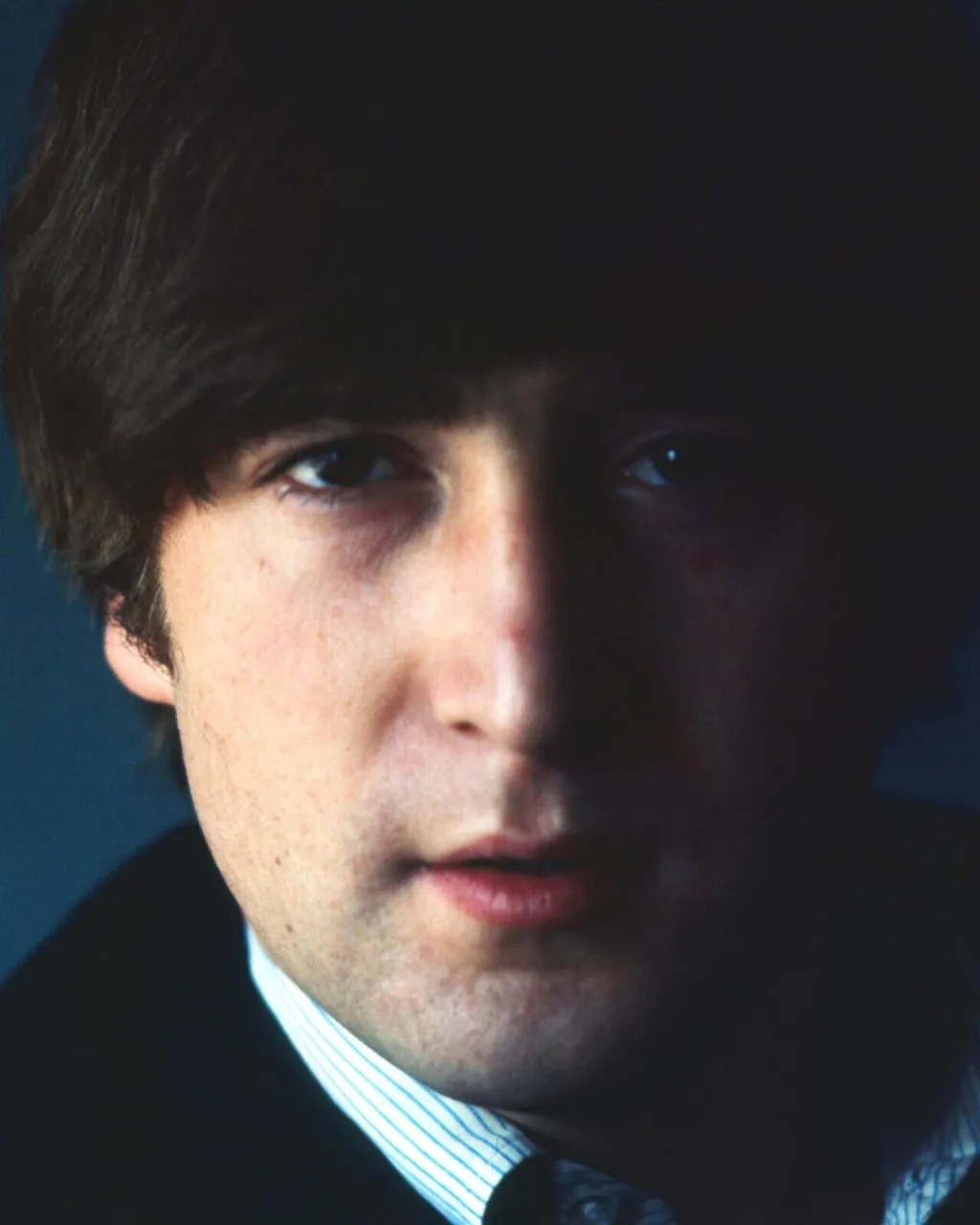 Photo: John Lennon, via cdn10.bigcommerce.com
What's interesting about Lennon isn't the music — that's the famous part. It's what he did with language. His books, In His Own Write and A Spaniard in the Works, are genuinely strange and funny pieces of literary wordplay. He was, among other things, a writer of considerable originality who had been processed through an education system that found him baffling and slightly exhausting. The system's loss was considerable.
But Lennon is the famous example. There are others that don't get mentioned as often.
The Scientist Who Couldn't Sit Still
Michael Faraday left school at thirteen. He had received almost no formal education — his family were members of a small Christian sect called the Sandemanians, and his schooling was basic at best. He was apprenticed to a bookbinder in London and spent seven years binding books and, crucially, reading them.
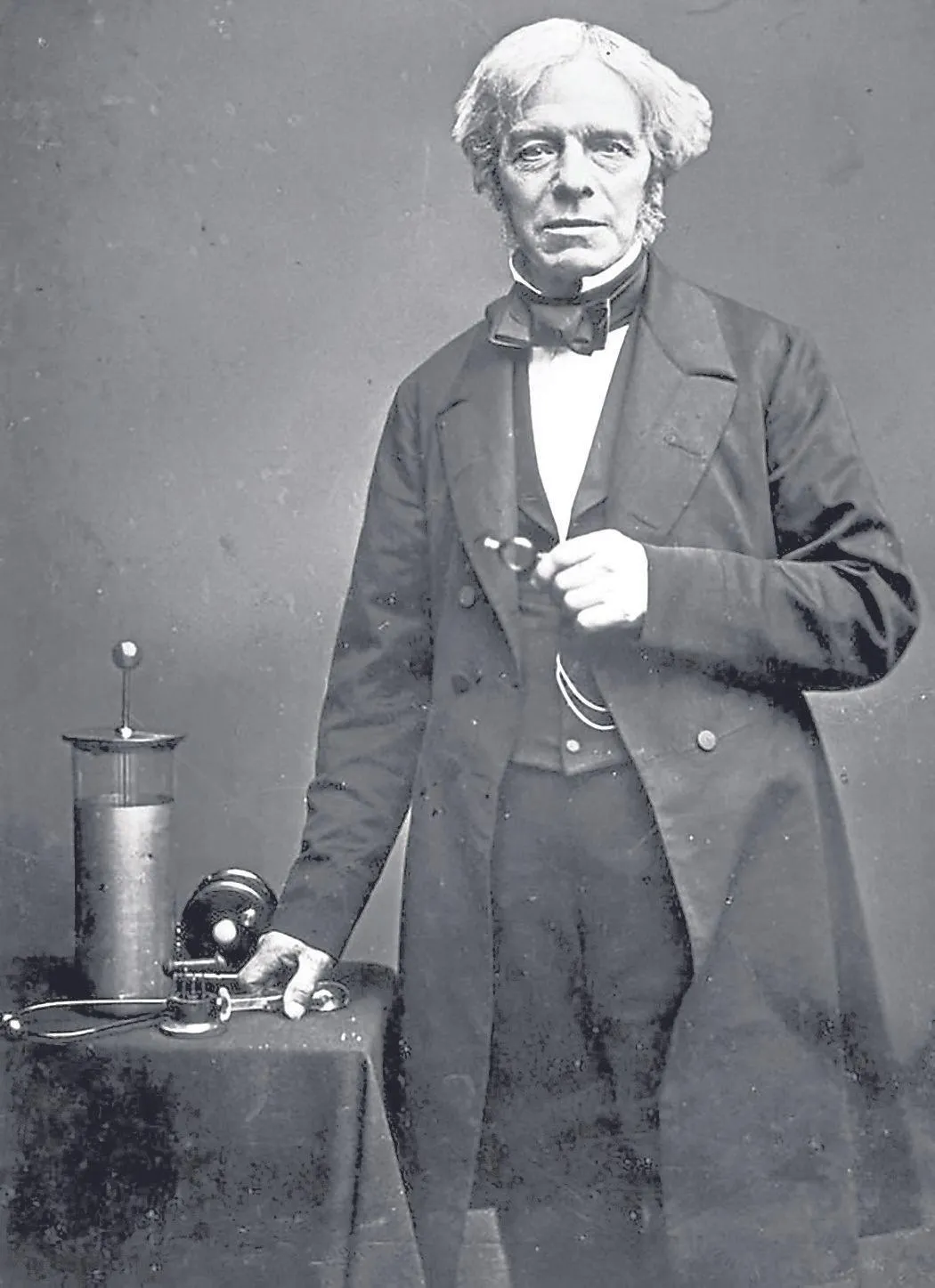 Photo: Michael Faraday, via wallpaperaccess.com
Faraday taught himself chemistry and physics through the books that passed through his hands. He attended lectures at the Royal Institution. He wrote to Humphry Davy, one of the leading scientists of the day, enclosing notes he had taken at those lectures. Davy hired him as a laboratory assistant.
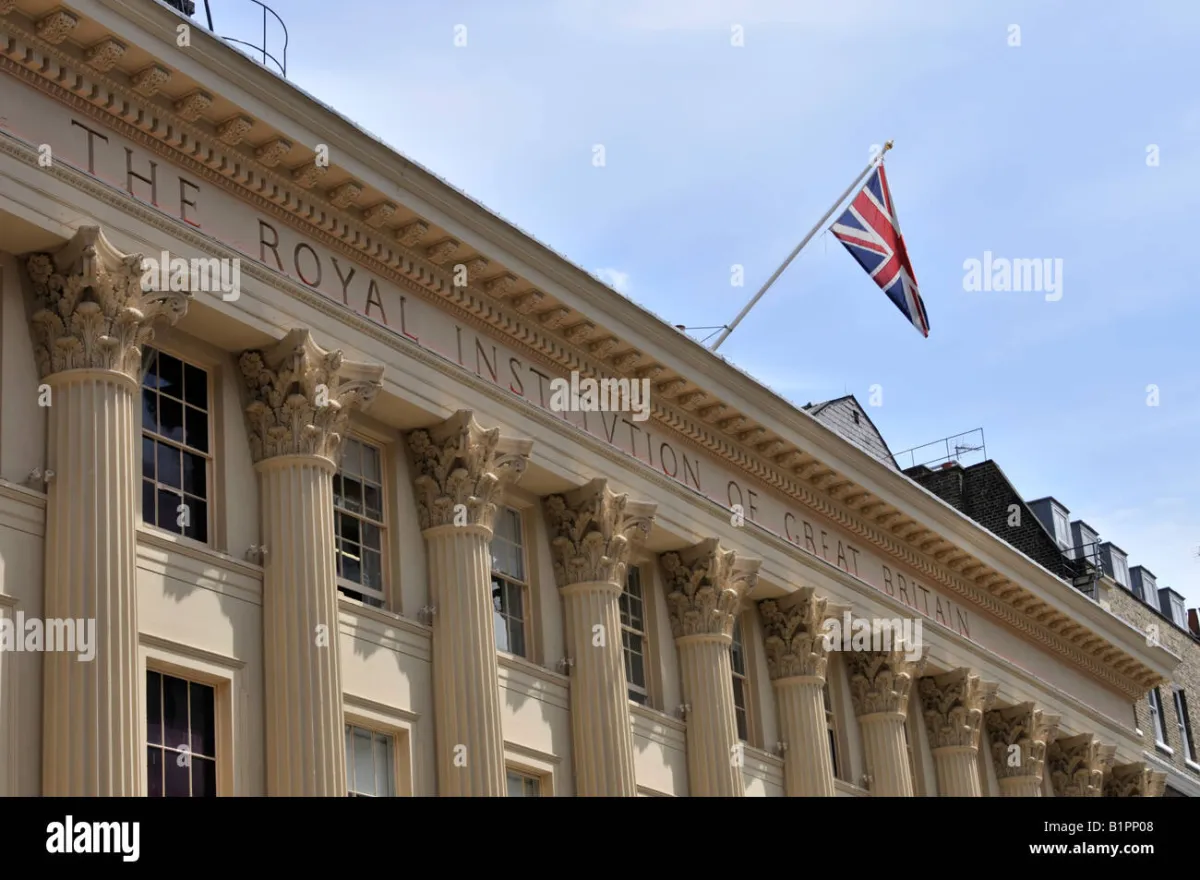 Photo: Royal Institution, via c8.alamy.com
Faraday went on to discover electromagnetic induction — the principle underlying every electric motor and generator ever built. He invented the electric motor. He developed the laws of electrolysis. He is, by most measures, one of the most consequential experimental scientists in history.
He had no university degree. He had no formal scientific training. He had, instead, seven years of reading everything he could find and the intelligence to understand what he was reading. The education system didn't fail Faraday, exactly — it simply never had the chance to get its hands on him. Which might be why he turned out the way he did.
What the Dropouts Have in Common
Spend enough time looking at the biographical details of Britain's unconventional thinkers and a pattern emerges that isn't quite what the standard narrative suggests.
It isn't that these people were secretly brilliant in ways the system failed to detect. Some of them were, yes. But others were genuinely difficult. Lennon was disruptive. Turner — J.M.W. Turner, who transformed British landscape painting — was described by contemporaries as socially awkward and professionally prickly in ways that would today probably attract various diagnostic labels. Richard Branson, who left school at sixteen with the headmaster famously predicting he'd either end up in prison or become a millionaire, was genuinely not well-suited to formal academic environments.
The common thread isn't hidden genius. It's a particular relationship with structure: a tendency to find the existing framework insufficient, to push against it, to look for the edges of the defined space and keep going past them.
This is enormously inconvenient in a classroom. It's enormously useful almost everywhere else.
The Historians' View
Dr Matthew Grenby, a cultural historian who has written about British childhood and education, suggests that the dropout-to-visionary story reflects something real about the tension between institutional learning and creative thinking, but cautions against over-romanticising it.
"For every Faraday, there are thousands of people who left school early and whose potential was genuinely curtailed by that," he notes. "The survivors who made it through — the ones we celebrate — were often extraordinary in ways that transcended their circumstances. But those circumstances still cost them things. And we shouldn't mistake resilience for evidence that the system worked."
This is the uncomfortable part of the story. The Faradays and the Lennons and the Bransons who made it through are the visible ones. The people with equivalent potential who didn't — who were ground down by poverty, by lack of access, by the sheer difficulty of self-educating without the social connections that Faraday was lucky enough to stumble into — are invisible to us. They didn't get to write the memoir.
The Art School Safety Net
Britain's art schools deserve a separate mention, because they functioned for much of the twentieth century as a kind of institutional pressure valve — places where people who couldn't fit elsewhere were absorbed and, occasionally, transformed.
The list of people who passed through British art schools and went on to reshape culture is almost comically long. Lennon, as mentioned. Keith Richards. Pete Townshend. David Bowie briefly attended Bromley Technical High School, which had an art stream. Ridley Scott studied at the Royal College of Art. The art school wasn't just a place to learn painting — it was a place where a certain kind of mind could be strange without immediate consequence, where the curriculum was loose enough to accommodate people who thought sideways.
The current state of British arts education — squeezed by funding cuts, downgraded in school league tables, treated as a luxury rather than a pipeline — is worth considering in this context. If the art school was the place that caught the ones the system dropped, what happens when the net itself is cut?
The Question Worth Asking
The standard version of the dropout-genius story ends with triumph. The misfit wins. The teacher is proven wrong. The system is implicitly vindicated by the fact that the person survived it.
But there's a different question buried in these stories, and it's the one that historians like Grenby keep circling back to: what does it tell us about our definition of intelligence?
The British education system — at least in its post-war grammar school incarnation, and to some extent in its current form — has historically rewarded a particular kind of cognition. Linear. Structured. Good at absorbing and reproducing existing knowledge. These are useful qualities. They produce good doctors and competent engineers and reliable civil servants.
They are not, in any obvious way, the qualities that produced Faraday's electromagnetic induction, or Lennon's A Day in the Life, or Turing's conceptual architecture of modern computing. Turing, incidentally, was considered a difficult pupil. His Sherborne schoolmaster wrote that his work was "dirty" and his methods "wrong." He was doing university-level mathematics at sixteen and presenting it in ways his teachers found illegible.
Britain's Most Renewable Resource
If there's a conclusion to draw from all of this — and it's a tentative one — it's that Britain has historically generated a surplus of minds that its institutions couldn't contain. Some of those minds found their way out anyway: through bookbinderies and art schools and self-directed obsession and sheer stubborn refusal to accept the assessment of a teacher who had thirty other pupils to worry about.
The ones we know about changed things. The ones we don't know about — the ones the system lost entirely — are the real measure of what was squandered.
Britain's greatest asset might well be the brilliant minds it nearly lost. The more troubling possibility is that its greatest ongoing failure is the ones it loses completely, without anyone ever knowing what was there.
That's not a comfortable thought to sit with. But it's probably the more honest version of the story.