Ours First, Theirs Forever: The Great British Inventions the World Quietly Pocketed
There is a particular experience — familiar to anyone who has ever watched a Hollywood film set in Victorian London — of sitting in a cinema, watching an American actor play a British scientist who is about to discover something world-changing, and thinking: yes, but we all know how this ends, don't we?
It ends with the idea leaving. Getting refined somewhere else. Coming back to us wearing different clothes, speaking with a different accent, and carrying a brand story that has very carefully edited out the bit where it started in a draughty room in the Midlands.
This is not a complaint, exactly. It's more of an observation. And possibly a listicle.
1. The World Wide Web
We might as well start with the big one.
Tim Berners-Lee, a physicist from south-west London, invented the World Wide Web in 1989 while working at CERN in Switzerland. He is, by any reasonable measure, one of the most consequential people of the twentieth century. He was knighted. He received the Order of Merit. He is genuinely celebrated.
 Photo: Tim Berners-Lee, via www.telecomstechnews.com
And yet. Ask a random person on the street in, say, San Francisco who invented the internet, and you'll get a range of answers — DARPA, Silicon Valley, various Americans — before Tim Berners-Lee comes up. The web is culturally claimed by California. The infrastructure myth belongs to American military research. The British physicist who actually designed the thing that you're using right now is a footnote in the popular imagination.
Berners-Lee, for his part, gave the whole thing away for free. Which is either extraordinarily generous or extraordinarily British, depending on your perspective. Possibly both.
2. The Computer
Charles Babbage. Ada Lovelace. Colossus. Alan Turing.
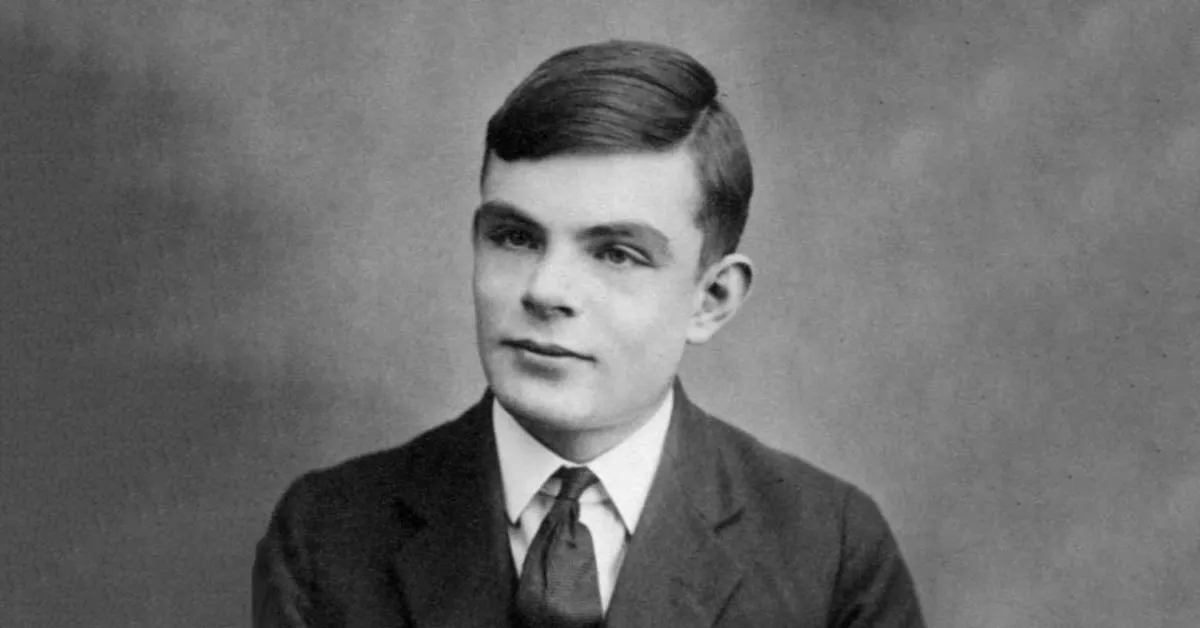 Photo: Alan Turing, via dataconomy.com
The conceptual and practical foundations of modern computing were laid almost entirely by British minds. Babbage's Difference Engine was a mechanical computer a century before electronics made the concept viable. Lovelace wrote what is widely considered the first algorithm. Turing's theoretical framework — the Turing machine — is literally the conceptual basis on which all modern computing is built.
And Colossus, built at Bletchley Park by Tommy Flowers and his GPO colleagues, was the world's first programmable electronic computer. It was also, for reasons of wartime secrecy, classified for thirty years after the war ended. By the time anyone could talk about it, ENIAC — the American machine built in 1945 — had already claimed the 'first computer' story in the public consciousness.
We invented it. We kept it secret. We lost the narrative. Quintessentially us.
3. The Telephone
Alexander Graham Bell is American. Except he was born in Edinburgh. Grew up in Edinburgh. Was educated in Edinburgh. Moved to Canada as an adult, then to the United States, where he developed the telephone.
The invention is claimed wholesale by American culture. Bell is an American icon. There are statues, museums, corporations. The fact that his formative intellectual years were spent in Scotland, and that his father Alexander Melville Bell — who profoundly influenced his thinking about sound and speech — was a Scottish elocutionist, rarely features in the American version of the story.
We're not saying we invented the telephone. We're saying the man who invented the telephone was shaped by Britain in ways that the American mythology finds inconvenient to mention.
4. The Jet Engine
Frank Whittle. Royal Air Force. Coventry. 1930.
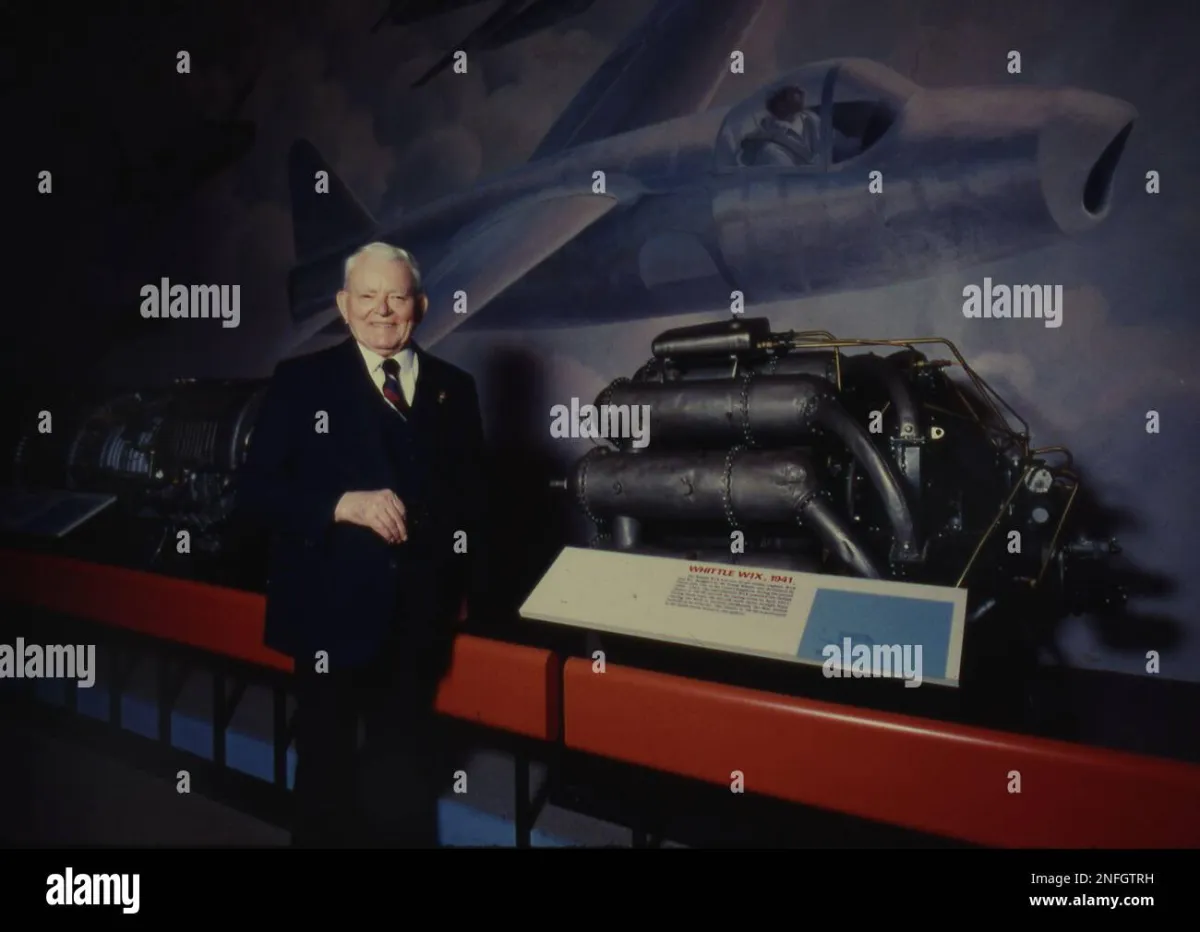 Photo: Frank Whittle, via c8.alamy.com
Whittle filed the patent for a turbojet engine in 1930. The Air Ministry declined to fund it. He pursued it himself, on a shoestring, for years. The Germans — who had been watching — developed their own jet engine independently, and the Heinkel He 178 became the first jet aircraft to fly, in 1939.
Britain eventually caught up. The Gloster Meteor became the Allies' only operational jet fighter in the war. But the jet age, as a cultural moment, belongs to the Americans — to Chuck Yeager breaking the sound barrier, to the glamour of postwar American aviation, to Boeing.
Whittle was knighted, eventually. He also spent years fighting for proper recognition and compensation. He died in the United States, having emigrated there in his later years. Even our jet engine pioneer ended up leaving.
5. The Worldwide Auction House
This one is subtler but worth including. The modern auction house — the institution of the timed public sale with ascending bids, applied to art, antiques, and luxury goods — was essentially invented in Britain. Sotheby's was founded in London in 1744. Christie's followed in 1766.
Today, both are headquartered in London but operate as genuinely global institutions with American ownership structures and New York sales that dominate the headlines. The big-ticket auction moment — the Warhol, the Basquiat, the diamond — is always framed as a New York story. The British origin of the entire format is treated as quaint history rather than foundational contribution.
6. Football
Yes, obviously. But it bears repeating.
Association football — the rules, the structure, the concept of a formalised competitive sport with standardised play — was codified in England in 1863 by the Football Association. Britain gave the world its most popular sport. We then spent 150 years being eliminated from major tournaments by countries we taught the game to.
The global football industrial complex — the Premier League's international broadcast deals notwithstanding — treats England as one nation among many rather than the originating culture. Which is philosophically interesting, if occasionally maddening to watch on a Sunday afternoon.
7. The Programmable Loom and the Logic of Automation
Joseph Marie Jacquard gets the French credit, but the conceptual leap from punch-card loom to programmable logic happened in a conversation with British textile innovation that is rarely told properly. The British industrial textile industry drove demand for mechanical automation that made the Jacquard loom commercially viable. The feedback loop between Lancashire mill culture and French mechanical ingenuity is a shared story that tends to get told as a French one.
More directly: it was Charles Babbage who saw the punch-card mechanism and understood its computational implications. The loom-to-computer lineage runs straight through British industrial curiosity.
8. The Concept of the Programmable Computer Game
William Higinbotham created Tennis for Two in 1958. But the theoretical framework for interactive computational play — games as a form of human-computer interaction — was explored by British researchers in the early 1950s. Christopher Strachey wrote a draughts programme for the Ferranti Mark 1 in 1951. Alan Turing wrote a chess programme around the same time.
The video game industry is American and Japanese in the popular imagination. Britain's foundational contribution to the concept of play as computation is largely invisible.
9. The Discount Supermarket Model
Jack Cohen founded Tesco in 1919, selling surplus groceries from a market stall in Hackney. The model — buying cheap, selling cheap, moving volume — predates the American superstore concept by decades. The cultural ownership of mass-market retail innovation sits with Walmart and American consumer culture. The British original is treated as a slightly embarrassing cousin.
10. The Concept of Intellectual Property Itself
The Statute of Anne, passed in Britain in 1710, was the world's first copyright law. It established the principle that creators have rights over their work — a concept so fundamental to the modern creative and technology economy that it's essentially invisible as a British invention. Every streaming royalty dispute, every patent filing, every terms-and-conditions agreement traces its philosophical lineage back to an act of the British Parliament.
We invented the idea that ideas belong to people. We then watched other people take that idea and build empires with it.
So. That's ten. There are more — the list has a habit of growing the longer you look at it. The point isn't really indignation, though a small amount of indignation seems entirely reasonable. The point is something more interesting: Britain has a persistent habit of generating ideas and then losing the story of them.
Perhaps it's modesty. Perhaps it's the secrecy instinct that kept Colossus classified for three decades. Perhaps it's a national tendency to distrust anyone who makes too much noise about their own brilliance.
Whatever the reason, the ideas kept coming. They keep coming still. Whether we manage to hold onto the credit this time is, as ever, another matter entirely.