Post Your Thoughts: The British Forums That Accidentally Built the Future While Nobody Was Looking
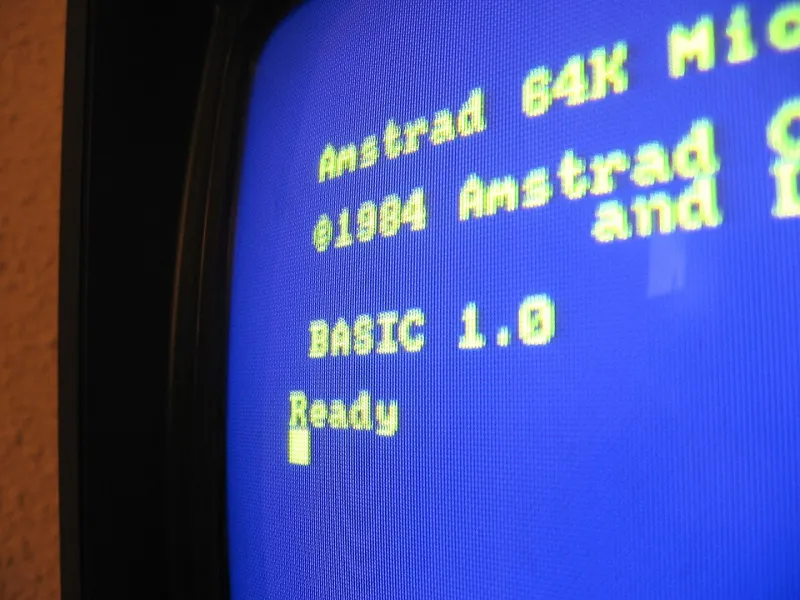
Photo: Manuel Bartual from Madrid, España, CC BY-SA 2.0, via Wikimedia Commons
The colour scheme was usually terrible. The threading was confusing. The moderation was either completely absent or wielded by a seventeen-year-old with strong opinions about font choices. But something happened in those early British online forums that no one really planned for and very few people have properly credited: they worked. Not just as places to chat, but as genuine engines of connection, creativity, and change.
We tend to tell the story of the internet as an American story. Silicon Valley, Stanford dorms, garages in Palo Alto. But the British internet had its own character, its own communities, and its own unlikely contributions — many of them born in the kind of niche, obsessive, deeply specific online spaces that the major platforms have spent twenty years trying to replace and never quite managed to.
The Peculiar British Art of the Forum
There was something about the forum format that suited the British temperament particularly well. It rewarded patience, precision, and a certain dry wit. It punished bluster. A newcomer who arrived with too much confidence and too little knowledge would be gently, sometimes not so gently, corrected by people who had been thinking about nothing else for three years. This was not always pleasant. It was often extremely useful.
The early UK tech community coalesced in places like the newsgroups that preceded the web proper, then migrated to dedicated forums as the infrastructure improved. Sites like The Register — founded in 1994 and still going — created a community of technically literate, sceptical, frequently sarcastic British readers who were among the first to interrogate the claims of the tech industry with the kind of forensic attention they deserved. The comment threads were, at their best, genuinely informative. The culture they created — critical, curious, allergic to marketing speak — influenced how a generation of British technologists thought about their industry.
MoneySavingExpert and the Forum as Public Service
If you want a concrete example of a British online community that created tangible, measurable change in the real world, you don't need to look further than MoneySavingExpert. Martin Lewis launched the site in 2003, initially as a fairly simple resource, but the forums that grew up around it became something more interesting — a vast, distributed network of people sharing specific, practical knowledge about navigating the British financial system.
The information that circulated in those threads was often better than what you'd get from a financial adviser. People shared bank charges reclaim templates that helped consumers recover hundreds of millions of pounds in fees that banks had been quietly levying for years. They coordinated on energy switching, on cashback offers, on the precise wording of complaints letters. The forum wasn't just a community — it was a form of collective intelligence applied to a problem that affected almost everyone.
Lewis eventually sold the site to MoneySuperMarket for £87 million in 2012. But the forum culture that made it valuable — the trust, the specificity, the genuine expertise of regular contributors — was the product of years of unglamorous, unpaid participation by thousands of people who just wanted to help each other not get ripped off.
The Mumsnet Effect
Mumsnet is the other obvious case study, and it's one that deserves more serious analytical attention than it usually receives. Founded in 2000 by Justine Roberts and Carrie Longton, it grew from a practical parenting resource into something considerably more complex — a forum community with genuine political influence, a track record of holding public figures to account, and a culture that has shaped public debate on everything from breastfeeding to Brexit.
The "Mumsnet effect" became a shorthand in British political circles for a specific kind of voter engagement that the major parties found difficult to manage. Politicians who performed well on Mumsnet webchat sessions — a format that rewarded directness and penalised evasion — got credit for it. Those who didn't found the receipts circulating for a very long time.
What made Mumsnet work was the same thing that made all the best forums work: genuine community ownership. The regular users set the tone, enforced the norms, and created a culture that was recognisably theirs. The platform provided the infrastructure; the community provided the value. When that relationship was in balance, the results were remarkable.
The Niche Forums You've Never Heard Of
But the most interesting stories often come from the smaller, stranger corners of the British internet. There is a forum community built around British narrow-gauge railways that, over twenty years, has compiled a body of historical documentation more comprehensive than anything held in any official archive. The members — mostly retired, mostly passionate, collectively extraordinary — have photographed, catalogued, and digitised records that would otherwise have been lost. Several professional historians have used their work as primary sources.
A UK-based forum for amateur astronomers, running since the late 1990s, became an informal training ground for a generation of astrophotographers — people who learned their craft entirely through peer instruction in online threads and who have since produced work that has appeared in national publications and contributed to citizen science projects run by major observatories. The forum produced a community; the community produced expertise; the expertise produced results.
Then there's the story of the UK garage music forums of the late 1990s and early 2000s, where producers, DJs, and fans discussed an emerging sound in real time — tracking releases, debating influences, arguing about what the scene was becoming. These conversations weren't just cultural documentation; they were active participants in the scene's evolution, shaping tastes and connecting artists with audiences in ways that the mainstream music press was too slow to do.
What Was Lost When the Feeds Arrived
It would be dishonest to tell this story without acknowledging what happened next. The social media platforms — Facebook, Twitter, and later Instagram and TikTok — didn't kill the forums exactly, but they absorbed most of the attention and energy that had once flowed into them. The economics of engagement favoured the feed over the thread. The algorithmic amplification of emotional content worked against the kind of patient, incremental knowledge-building that forums did best.
Some communities survived by migrating to Discord, which preserves something of the forum structure while adding the immediacy of chat. Reddit, American-owned but with a significant British user base and a number of UK-specific communities, carries on the tradition in a recognisable form. But something was lost in the transition — a certain slowness, a certain depth, a willingness to sit with a topic for years rather than hours.
The Conversation Continues
What the history of British online forums ultimately demonstrates is something that the internet's more triumphalist advocates sometimes forget: the value was never in the technology. It was in what people chose to do with it. The forums were mostly ugly, often badly organised, and ran on servers that crashed at inconvenient moments. None of that mattered, because the people in them were genuinely interested in each other and in the things they were discussing.
The communities they built — the knowledge they accumulated, the relationships they formed, the industries and movements and campaigns they quietly incubated — were real. They happened because a lot of ordinary British people sat down at their computers, typed something into a text box, and hit post. It turns out that was enough.