Salt on Their Sleeves: The Shoreline Watchers Who Made Rockpools Speak
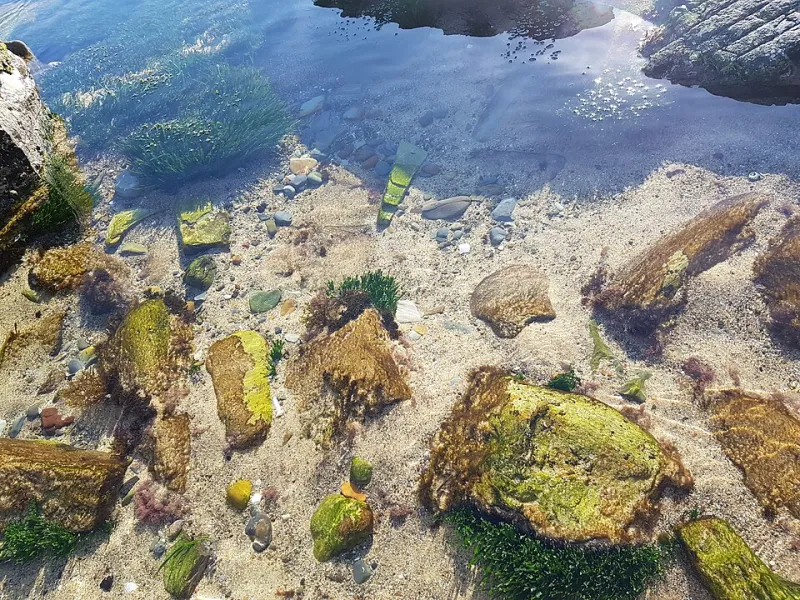
Photo: Costante.conte, CC BY-SA 4.0, via Wikimedia Commons
There's a particular kind of person who, on a grey August afternoon in Cornwall, will spend two hours crouched over a puddle. Not just any puddle — a rockpool, a small glass-walled world of anemones, blennies and hermit crabs, watched with the sort of attention most people reserve for a chess match. Britain has produced an astonishing number of these people. And, as it turns out, they've been quietly shaping how we understand life on Earth.
The Victorian Craze That Started It All
Begin in the 1830s, when seaweed collecting became an obsession of the respectable middle classes. Albums of pressed algae — often assembled by women, who were barred from most scientific institutions — circulated through drawing rooms like trading cards. Amateurish? On the surface. But these collections preserved specimens, mapped distributions along the coast, and built the taxonomic foundations that professional marine biologists would later lean on without always saying so.
Philip Henry Gosse, a naturalist and populariser, did more than anyone to sanctify the rockpool. His 1856 book A Naturalist's Rambles on the Devonshire Coast didn't just catalogue what lived in the pools — it argued that careful, patient watching was science. He built the first public aquarium in London on the back of that conviction, and thousands of families discovered that the shoreline was a library, not a playground.
Patient Eyes and Slow Debates
What the rockpool watchers contributed to the great intellectual arguments of the age is easy to underestimate. Questions about adaptation, variation and the boundaries between species don't need a far-flung expedition to pose — a shoreline at low tide poses them for free. Observations of colour variation in periwinkles, the territorial habits of blennies, and the strange reproductive strategies of sea slugs all fed, in fragments and letters and society papers, into the broader ferment that Darwin's century became.
The pattern holds a simple lesson: a country with eleven thousand miles of coastline and a surplus of curious eccentrics doesn't need to fund everything. Some knowledge simply washes up.
The Modern Tide-Pool Army
Fast-forward to now, and the tradition is thriving — just wearing wellies and carrying phones instead of collecting jars. Volunteer-led surveys around Cornwall, Devon and the Scottish west coast log species presence, track invasive arrivals like the Pacific oyster, and feed data into conservation decisions that affect actual policy. Marine Conservation Society volunteers pick litter and record what they find. Shoresearch surveys turn ordinary beachgoers into distributed instruments.
This isn't nostalgia. Coastal ecosystems are shifting faster than professional monitoring can cover, and the rockpoolers are the only network dense enough to notice. When water temperatures nudge upward, it's often a retired teacher on a Pembrokeshire beach who spots the first anomaly.
The Overlooked Institute
We tend to imagine research happening in gleaming facilities with grant committees and ethical review boards. Much of it does. But the shoreline naturalists remind us that observation — humble, repetitive, unpaid — remains the bedrock of discovery. The rockpool is a laboratory with no heating bill and no door policy.
So next time you see someone crouched over a pool with a notebook, resist the urge to assume they're merely eccentric. They might be. But they're also part of the longest-running research programme in British history, and the tide is their clock.