Seven Beautiful Botches: When Mangled Translations Handed Britain Its Best Ideas
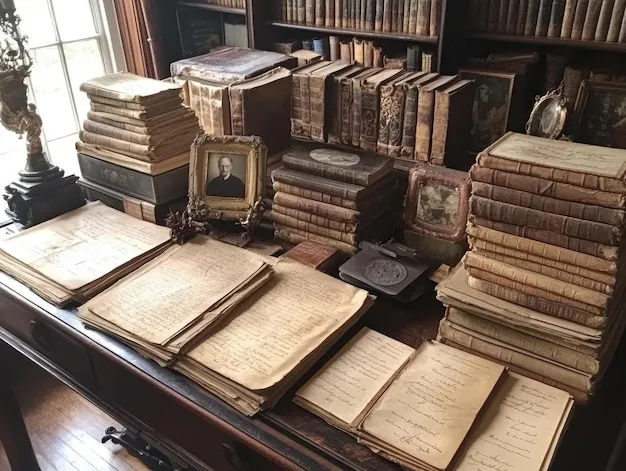
Photo: old manuscripts dictionary translation antique books desk, via img.freepik.com
We like to imagine progress as a clean line from brilliant mind to brilliant discovery. In reality, the line is usually crossed, smudged, and occasionally written by someone who misread the whole page. Some of Britain's most productive wrong turns began with a translation error — and thank goodness for it.
1. The Dragon That Named the Fossil Trade
When early British geologists pored over continental manuscripts describing giant 'dragons' preserved in stone, the translations were loose at best. But the romantic error fired the popular imagination, helping turn fossil hunting from clerical curiosity into a national obsession that Mary Anning and her successors rode to scientific glory.
2. A Botched Bible, A Language Reborn
Early English translations of foreign religious texts were riddled with errors — some of which entered everyday speech and stuck. Misreadings coined phrases that became cornerstones of the language, proof that a mistake repeated often enough becomes vocabulary.
3. The Mislabeled Map That Sent Sailors Looking
Charts copied from foreign sources occasionally garbled place names and coordinates. Enterprising British captains, chasing islands that didn't exist, kept stumbling across ones that did — and charting them properly. Wrong destinations, right discoveries.
4. The Dictionary Disaster That Improved the Dictionary
Early English lexicographers, working from mangled French and Latin glossaries, imported definitions that were flatly incorrect. But the effort of correcting them forced Dr Johnson's generation to build definitions from actual usage — a revolution in how we catalogue language.
5. The Misread Manuscript That Rewrote Medicine
Translations of classical medical texts filtered through Arabic and back into Latin lost plenty along the way. British physicians who noticed the contradictions couldn't reconcile them — so they went out and tested things themselves. Scepticism, born of confusion, became the foundation of clinical observation.
6. The Garbled Engineering Note
Imported technical manuals of the industrial era were frequently mistranslated by clerks with no engineering background. Some British workshops, unable to follow the instructions, were forced to reverse-engineer the machinery — and in doing so improved on it. The error created the tinkerer; the tinkerer created the patent.
7. The Poetry of the Mistake
Victorian translators of Japanese and Chinese verse produced versions so loose they were practically new poems. British writers who absorbed these 'translations' absorbed a style that never existed in the original — and invented from it. Imagism, and half of modern English poetry's restraint, owes a debt to what got lost.
In Praise of the Productive Error
The pattern here isn't luck — it's a principle. A wrong reading forces a fresh question, and a fresh question is worth more than a correct answer nobody thought to challenge. Britain's geniuses weren't immune to mistranslation; they were often made by it. So the next time someone corrects your reading of the instructions, smile politely, and consider whether your mistake might be the interesting one.