Tiny Trains, Enormous Ideas: The Model Railway Clubs That Quietly Engineered the Future
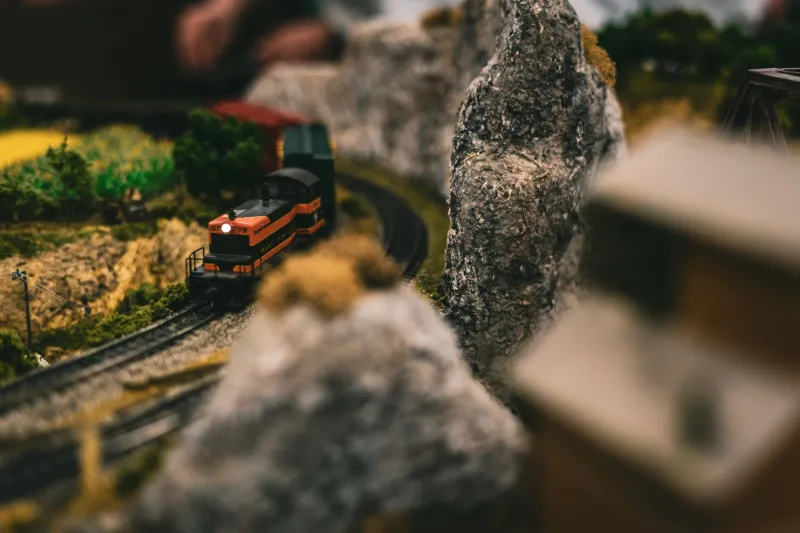
Let's be honest about the cultural baggage. Say "model railway club" to most people in Britain and a very specific image assembles itself: a slightly damp church hall somewhere in the Home Counties, a trestle table covered in green scatter material, and a group of men of a certain age arguing passionately about the correct livery for a 1950s BR Standard Class 4. It is not, on the face of it, the image of a technological vanguard.
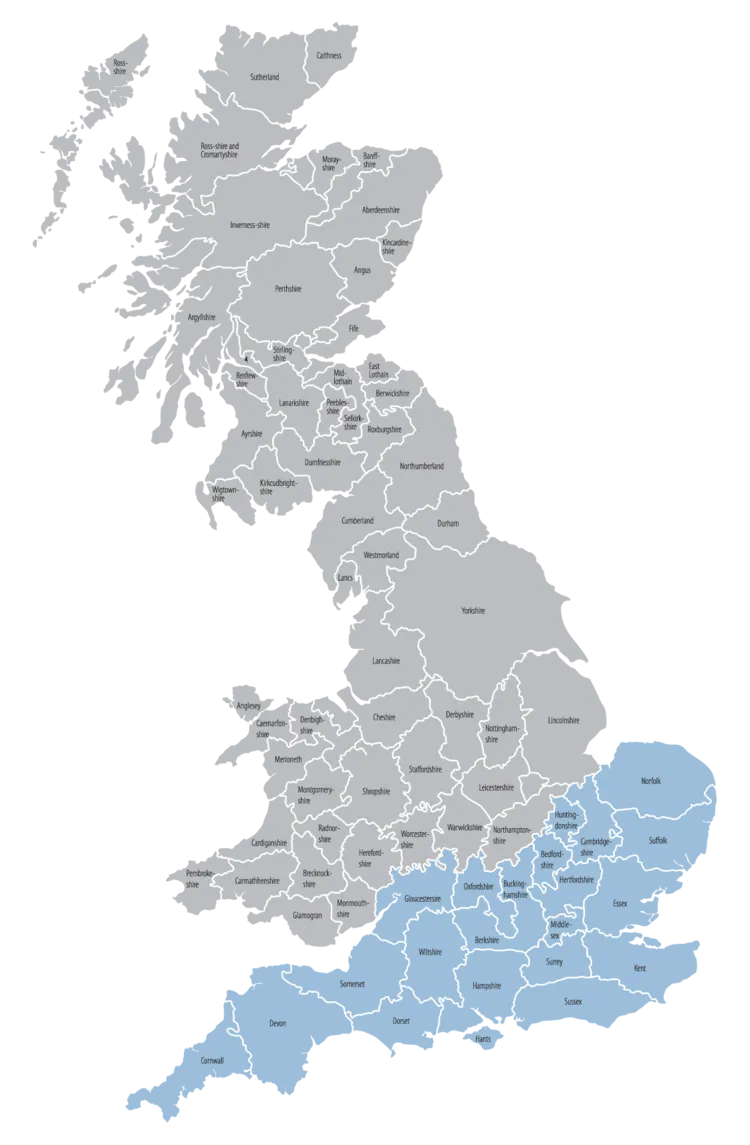 Photo: Home Counties, via alchetron.com
And yet.
Britain's model railway community — patient, meticulous, and almost pathologically detail-obsessed — quietly produced a body of engineering innovation that would eventually ripple outward into industries those hobbyists had never considered. Aerospace. Robotics. Early computer-controlled systems. The miniaturised electronics now embedded in devices we carry in our pockets. The story of how they got there is one of The Genius Wave's favourite kinds: entirely accidental, completely unassuming, and rather brilliant.
The Precision Problem Nobody Else Was Solving
Model engineering, at its most serious, is a discipline of almost unreasonable exactitude. To build a working locomotive at 1:76 scale — the standard OO gauge used by most British clubs — and have it run reliably on a home layout requires tolerances that would make a decent machinist raise an eyebrow. Wheels must be true. Gearing must mesh without binding. Electrical pickups must maintain contact across imperfect track joints. Everything must be simultaneously tiny and functional.
In the 1950s and 60s, commercial model railway manufacturers were producing reasonable approximations of trains. But the truly serious hobbyists — the ones building their own locomotives from scratch in home workshops — were operating at a different level entirely. They were developing techniques for machining small components to fine tolerances, working with materials and surface finishes that the mainstream engineering industry hadn't fully explored at that scale.
Some of those techniques found their way outward. Members of model engineering societies — the slightly more hardcore cousins of the model railway clubs — were, in several documented cases, consulted by aerospace firms working on miniaturised components in the early space age. The knowledge transfer was informal, often personal, and almost never acknowledged in official histories. But it happened.
The Switching Problem and the Computer That Solved It
Here is where the story takes its most unexpected turn. Running a complex model railway layout — one with multiple trains, junctions, signals, and timed sequences — is, at its core, a control systems problem. How do you prevent two trains occupying the same section of track? How do you automate a sequence of points and signals to mimic real operational logic? How do you manage competing demands on a shared network in real time?
In the 1960s, a handful of British enthusiasts began experimenting with electronic control systems for their layouts. Early attempts used relay logic — banks of electromechanical switches wired together to enforce rules about which sections of track could be occupied simultaneously. It was crude, but it worked. And the logic embedded in those relay systems was, in retrospect, a physical implementation of concepts that computer scientists were simultaneously developing in rather more prestigious settings.
By the 1970s, some clubs were experimenting with early microprocessors to control their layouts. These were not professional engineers with institutional resources. They were weekend hobbyists, buying components from Maplin catalogues and teaching themselves to programme in machine code because they wanted their 08 shunter to behave like a real one. The systems they built were genuinely innovative. A few were later adapted for use in real industrial control applications — a fact that tends to surprise people who assumed the hobby was purely recreational.
Miniaturisation Before It Was Fashionable
The relentless drive toward smaller, lighter, more reliable components that characterises modern electronics has an unlikely early rehearsal ground in the world of model railways. Fitting a working motor, gearbox, and electrical pickup system into a locomotive the length of your thumb demands the kind of miniaturisation thinking that the consumer electronics industry would only fully embrace decades later.
British hobbyists in the 1970s and 80s were experimenting with surface-mount component techniques — fixing tiny electronic parts directly to circuit boards without through-holes — years before the practice became standard in commercial manufacturing. They were doing it because they needed to fit a decoder into an N-gauge locomotive body the size of a matchbox. The motivation was whimsical. The technique was genuinely ahead of its time.
Digital Command Control — the system now standard across the hobby worldwide, which allows individual locomotives to be addressed and controlled independently on the same track — was developed in Germany but refined and expanded significantly by British and American enthusiasts working independently. The protocol they established in the 1990s is a small but real contribution to the broader history of networked device communication.
The Club as Creative Ecosystem
What made the model railway club such a productive environment for this kind of innovation? The answer, perhaps surprisingly, has less to do with trains than with the social structure of the hobby itself.
A well-functioning club brought together people from wildly different professional backgrounds — electricians, draughtsmen, teachers, mechanics, the occasional academic — united by a shared obsession but contributing entirely different skill sets. The result was an unusually diverse problem-solving environment, one where a retired toolmaker's knowledge of metal fatigue might be applied to a question that a software engineer had raised about switching logic. This cross-pollination of expertise, happening informally over cups of tea on a Tuesday evening, produced solutions that no single discipline would have reached alone.
There's a lesson there that management consultants charge considerable sums to deliver. The model railway club had already figured it out, and they weren't even trying.
Still at It
The hobby hasn't stood still. Contemporary British model railway clubs are experimenting with 3D printing, computer vision for automated train detection, and wireless control systems that would have seemed like science fiction to the relay-logic pioneers of the 1960s. Some of the techniques being developed in club workshops are finding applications in robotics research — particularly in the area of small-scale autonomous navigation, where the challenge of a model locomotive finding its way around a complex layout turns out to be a useful analogue for larger problems.
So the next time someone makes a gentle joke about grown adults playing with toy trains, you might gently suggest they reconsider. The draughty church hall has, historically, been a more productive place than it looks. And the man arguing about locomotive livery might, in his spare time, be solving a problem that the aerospace industry hasn't quite cracked yet.
Brilliant ideas, it turns out, don't much care about the scale of the layout they emerge from.