Stamp of Defiance: The Stubborn British Eccentrics Who Rewrote the Rules of Human Connection
There's a particular kind of British stubbornness that doesn't get nearly enough credit. Not the grumbling, queue-respecting, mustn't-grumble variety — but the rarer, fiercer sort that looks at a system everyone else has accepted as permanent and says, quietly but with absolute conviction: this is ridiculous, and I'm going to fix it.
Britain's communication revolutions weren't engineered in gleaming laboratories with government backing and generous budgets. They were argued into existence by eccentrics, irritants, and dreamers — people who couldn't stop noticing how broken things were, and who lacked the social grace to simply get on with it.
The Man Who Made a Letter Affordable
In the 1830s, sending a letter in Britain was an exercise in class warfare. The cost was paid by the recipient, not the sender, and it varied wildly depending on distance and the number of sheets used. A working family might refuse a letter from a relative simply because they couldn't afford to accept it. The system was chaotic, corrupt, and — crucially — deeply profitable for those running it.
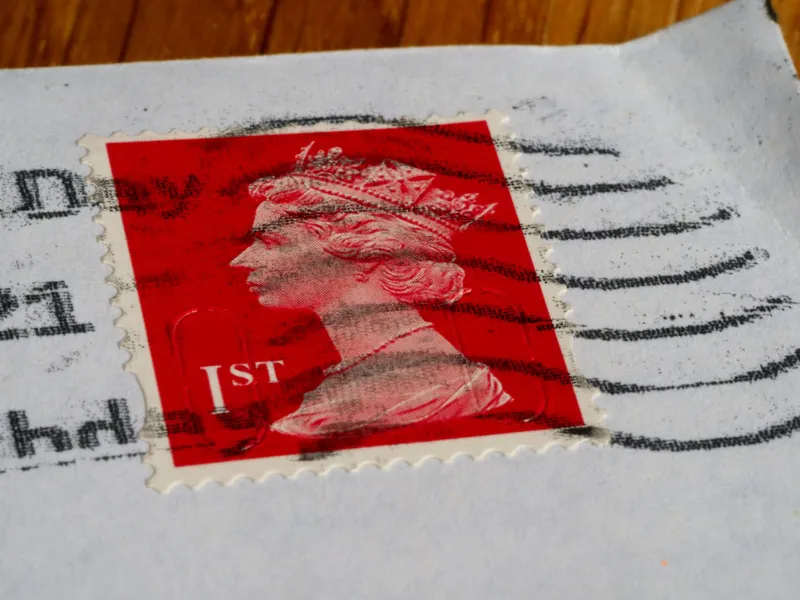
Rowland Hill was a schoolteacher and civil servant with no formal connection to the postal system and no particular reason to care about it. But he did care, with an almost unreasonable intensity. His 1837 pamphlet Post Office Reform: Its Importance and Practicability proposed something that struck the establishment as frankly deranged: a flat rate of one penny for any letter anywhere in Britain, paid by the sender, using a small adhesive stamp.
 Photo: Rowland Hill, via c8.alamy.com
Parliament was appalled. The Postmaster General called it "the most preposterous scheme that ever entered into the mind of man." Senior civil servants predicted financial catastrophe. Hill was dismissed, mocked, and marginalised.
The Penny Black launched in 1840. Within a year, letter volume had more than doubled. Within a decade, it had transformed commerce, personal correspondence, and the very texture of British social life. Hill had been right about everything, and the establishment had been wrong about everything, and history — as it tends to — sided with the irritating visionary.
What's striking isn't the technology. A sticky stamp is hardly rocket science. What's striking is the personality: the refusal to accept that an unfair system was a natural one.
Wires, Women, and the Victorian Internet
The telegraph gets credited to men in frock coats and top hats, and rightly enough in terms of the engineering. But the human story of British telegraphy is far stranger and more interesting than the textbooks suggest.
By the 1860s, a network of telegraph offices had spread across the country, and someone had to staff them. That someone, increasingly, was young women — recruited partly because they could be paid less, but who rapidly became the system's most competent operators. These women developed shorthand communication styles, invented informal protocols, and effectively created the first professional community of real-time message handlers Britain had ever seen.
They were, in a very real sense, the first moderators of a networked communications system. They dealt with garbled messages, irate senders, technical failures, and the occasional attempt to use the telegraph for purposes its inventors hadn't anticipated. They improvised, adapted, and quietly kept the whole thing running.
The wave of innovation they represented — human systems evolving faster than the institutions meant to contain them — is one that repeats itself throughout British communications history.
The Pigeon Problem and the People Who Solved It
It's easy to romanticise carrier pigeons, and Britain has a long and genuinely remarkable tradition of using them — most famously during both World Wars, when birds like Cher Ami and the legendary Winkie delivered messages that saved hundreds of lives. But what's less often noted is the community of working-class fanciers in the north of England and Wales who, long before any military application, had developed extraordinarily sophisticated breeding and training techniques.
 Photo: Winkie, via i.pinimg.com
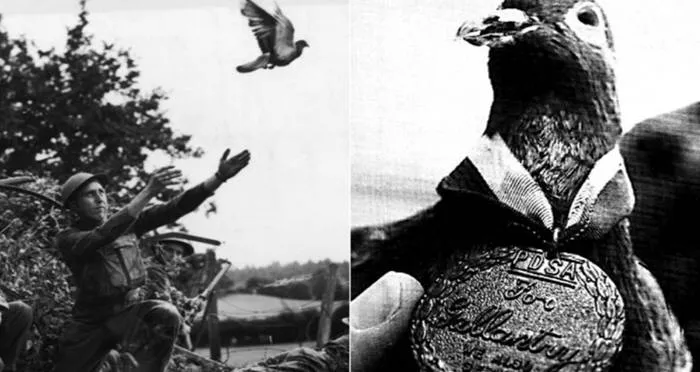 Photo: Cher Ami, via allthatsinteresting.com
These weren't gentlemen scientists with country estates. They were miners, mill workers, and dockers who kept birds in backyard lofts and competed fiercely in racing clubs that operated with their own rules, records, and culture. They understood aerodynamics, nutrition, genetics, and navigation — not in academic terms, but in the deep, practical way that comes from decades of obsessive attention.
When the military eventually came calling, they found an entire civilian infrastructure of expertise that had been hiding in plain sight. The pigeon post wasn't invented by the establishment. It was borrowed from the working class and dressed up in brass buttons.
Bedroom Coders and the Birth of Instant Everything
Fast-forward to the early 1980s, and a different kind of communication revolution was brewing in British bedrooms. The home computer boom — driven by machines like the Sinclair ZX Spectrum and the BBC Micro — had put processing power into the hands of teenagers who had absolutely no idea what the rules were, and no particular interest in finding out.
Among them were a scattered handful who started experimenting with something that didn't yet have a name: the idea that computers connected by phone lines could exchange messages in something approaching real time. Bulletin board systems appeared. Dial-up communities formed. People who had never met began constructing elaborate digital correspondences with strangers across the country.
The technology was slow, unreliable, and required a level of technical commitment that most people simply wouldn't bother with. But the instinct behind it — the refusal to accept that communication had to be slow, expensive, or mediated by institutions — was exactly the same instinct that had driven Rowland Hill to redesign the postal system a century and a half earlier.
Britain didn't invent the internet. But it produced, in disproportionate numbers, the kind of people who looked at a world without instant communication and found it personally offensive.
The Thread That Connects Them
What links Hill's penny stamp, the telegraph operators of the 1860s, the pigeon fanciers of the Welsh valleys, and the bedroom coders of Basildon isn't technology. It's temperament.
Each of them looked at a communication system — expensive, slow, gatekept by those with money or power — and refused to accept it as natural. Each of them was told, in various ways, that they were being naive, impractical, or simply annoying. Each of them turned out to be right.
The genius wave, when it comes to communication, rarely arrives from the direction anyone expects. It comes from the person who couldn't stop noticing the problem — and who lacked the good sense to stop talking about it.