Wired Wrong, Fixed Brilliantly: How Britain's Desperate Communicators Accidentally Invented the Future
Wired Wrong, Fixed Brilliantly: How Britain's Desperate Communicators Accidentally Invented the Future
There's a particular kind of British genius that doesn't announce itself. It doesn't file patents on a Tuesday morning or deliver TED talks in well-lit auditoriums. It turns up at half past eleven on a Thursday night, sleeves rolled up, muttering something unprintable at a relay switch that refuses to cooperate, and then — almost by accident — solves a problem that nobody had formally defined yet.
Britain's communication revolution wasn't a single eureka moment. It was a thousand small acts of desperation stitched together over two centuries, carried out by people whose job descriptions didn't remotely cover what they were actually doing.
The Pigeon Men Who Thought in Networks
Let's start somewhere unexpected: a muddy field in Belgium, 1917.
The British Army's carrier pigeon service was, by any measure, a logistical nightmare. Handlers were responsible for maintaining communication lines between forward positions and command posts when telegraph cables had been blown to pieces and runners couldn't get through. The birds worked. Mostly. But the real innovation wasn't the pigeon itself — it was the relay system the handlers improvised around them.
Faced with distances that exceeded a single bird's reliable range, handlers began establishing intermediate lofts — essentially repeater stations — positioned at calculated intervals across the front. Messages were transcribed, re-encoded, and passed on. It was, in every meaningful sense, a packet-switching concept worked out in a muddy tent by men who'd never heard the term and wouldn't have cared much if they had.
None of this was formally documented as a communications innovation. It was just what you did when everything else had failed. Which is, of course, the most British possible origin story.
The GPO's Invisible Engineers
Fast forward a few decades, and the General Post Office — that magnificent, underappreciated institution — was quietly running one of the most sophisticated communications operations on the planet. The GPO's engineering division, based largely in Dollis Hill in north London, was staffed by people who have never quite received their due.
 Photo: Dollis Hill, via uknip.co.uk
These were technicians who arrived at work in the morning, fixed things that weren't supposed to break, improved things that weren't supposed to need improving, and went home without telling anyone what they'd done. Among them were the engineers who worked on Tommy Flowers' Colossus project — the world's first programmable electronic computer, built to crack Nazi codes. Flowers himself was a GPO engineer. His bosses thought the project was a waste of valve components.
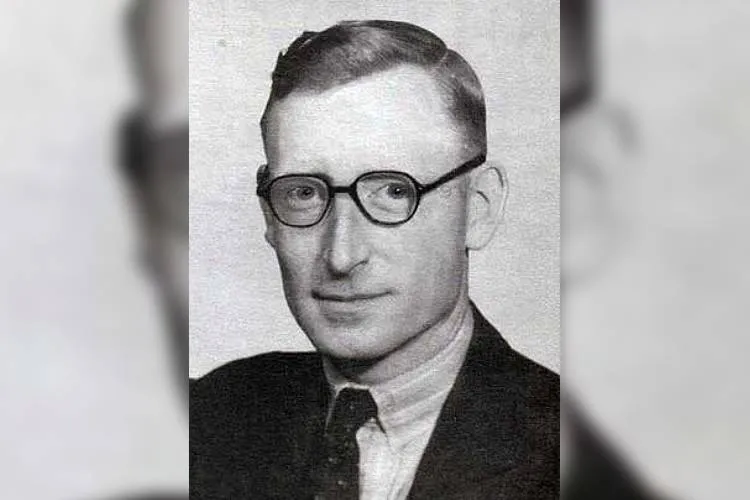 Photo: Tommy Flowers, via www.historyhit.com
But Dollis Hill's contribution to communication didn't stop at Bletchley Park. Throughout the 1950s and 60s, GPO engineers were developing automatic telephone exchange technology, experimenting with data transmission over telephone lines, and quietly laying the conceptual groundwork for what would eventually become broadband infrastructure. They weren't doing it because someone handed them a strategic roadmap. They were doing it because the existing system kept breaking in interesting ways, and interesting breakages have a habit of suggesting interesting solutions.
The Sorting Room Visionaries
While the engineers were rewiring Britain's nervous system underground, something equally peculiar was happening above ground in the sorting offices.
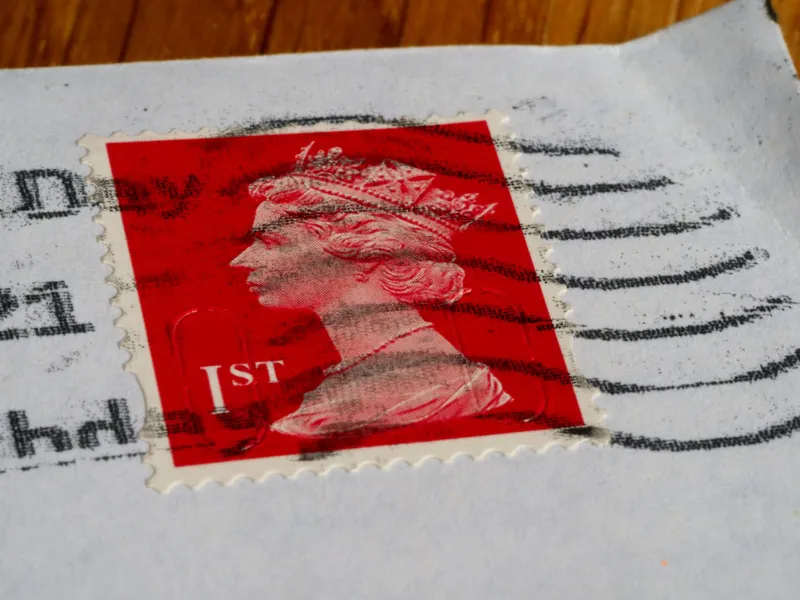
The Royal Mail's postcode system — introduced in 1959 with a pilot in Norwich — is often cited as a simple administrative convenience. But the thinking behind it was genuinely radical. The man credited with its development, Dr Norman Bray, was working on a system that could allow mechanical sorting of mail at scale: essentially, encoding geographic information into a short alphanumeric string that a machine could read and act on.
This is, if you squint slightly, a form of data compression applied to physical logistics. The postcode reduced complex geographic information to a scannable format — decades before QR codes, decades before barcodes became ubiquitous in retail. The concept of attaching a machine-readable location identifier to a physical object for routing purposes is now so embedded in global commerce that it's invisible. Britain did it first, with letters.
Sorting office workers, for their part, contributed something less celebrated but equally important: the informal feedback loops that helped refine the system. Posties who noticed that certain code boundaries caused confusion flagged it. Supervisors who saw patterns in misdirected mail reported them up the chain. The postcode system was refined not by consultants but by the people who had to live with its failures every day.
The Victorian Telegraph Tinkerers
Go back further still, to the 1860s and 70s, and you find the telegraph engineers — the original after-hours innovators.
Britain's telegraph network expanded at extraordinary speed following the Electric Telegraph Company's establishment in the 1840s. The men who maintained it were frequently young, frequently underpaid, and frequently bored during the long overnight shifts when traffic was light. This combination — competence, time, and mild frustration — is basically a recipe for accidental invention.
Charles Wheatstone, one of the telegraph's British co-inventors, was himself a classic example of the type: a scientist who approached communication as a puzzle to be played with rather than a system to be managed. His duplex telegraphy experiments — sending two messages simultaneously over a single wire — were carried out with the slightly gleeful energy of someone who wasn't entirely sure it was going to work but was having a brilliant time finding out.
Less celebrated are the station operators who developed their own shorthand codes, compression techniques, and error-correction habits long before anyone formalised such concepts. When you read about early Morse operators who could identify colleagues purely by their 'fist' — the individual rhythm of their keying style — you're reading about people who had independently discovered that communication carries metadata alongside content. They just didn't have a word for metadata yet.
What Desperation Actually Looks Like
The thread connecting all of these stories isn't genius in the conventional sense. It's not the lone visionary burning the midnight oil with a grand theory. It's something more interesting: the intelligence that emerges when capable people are given a problem that matters, insufficient resources to solve it properly, and just enough autonomy to try something unexpected.
Britain, for various historical and institutional reasons, has produced an awful lot of these situations. The wartime pigeon handler couldn't wait for a committee to approve a relay protocol. The GPO engineer couldn't petition for a research budget. The postie with a better idea about code boundaries couldn't schedule a stakeholder consultation. They just got on with it.
The result is a communication history that's messier, stranger, and more human than the official version. It's a history of fixes that became features, workarounds that became standards, and improvisations that became infrastructure.
The Genius in the Mundane
There's something almost philosophical about the way Britain's communication breakthroughs tend to originate. The big, formal, well-funded projects — the ones with press releases and ribbon-cutting ceremonies — often produced incremental improvements. The leaps tended to come from the edges: the overnight shift, the sorting room floor, the muddy relay loft.
Maybe that's the real lesson here. Innovation in communication isn't primarily about having the right technology. It's about having the right problem — urgent, specific, and slightly intractable — and the right kind of stubborn, pragmatic mind applied to it.
Britain has never been short of either. The pigeon handlers, the GPO engineers, the Victorian telegraph operators, the postcode pioneers — they weren't trying to change the world. They were trying to get the message through.
It just turned out those were the same thing.