Up in the Air: The Kite-Flying Meteorologists Who Laughed Last at British Science
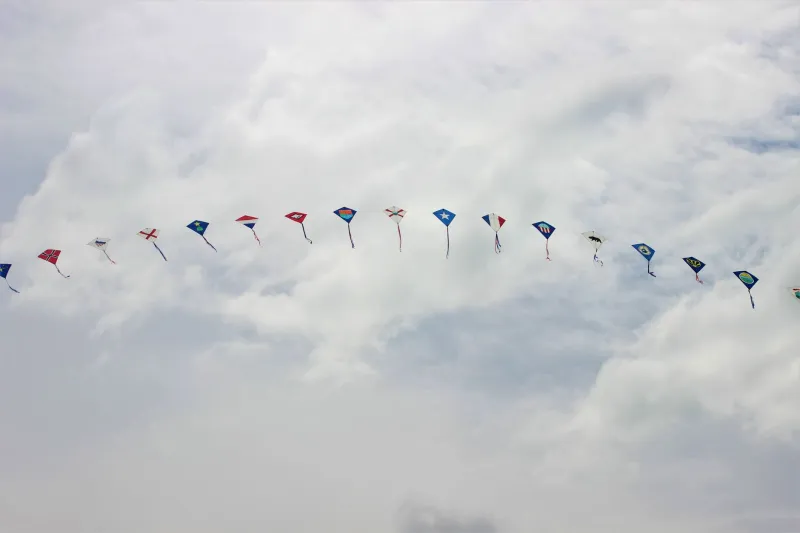
Picture the scene. It is 1898, somewhere on the Cornish coast. A man in a heavy wool overcoat is standing at the edge of a clifftop in a brisk Atlantic wind, paying out several hundred metres of piano wire connected to a train of box kites disappearing into low cloud. He has a notebook. He has a barometer. He has instruments attached to the kite line measuring temperature, humidity, and wind speed at altitudes no balloon had yet reached cheaply or reliably. He also has, from the perspective of his colleagues at the Royal Meteorological Society, absolutely nothing useful to contribute to the science.
He was, of course, doing something rather important.
The story of Britain's kite-flying meteorologists is one of the more satisfying vindication narratives in the history of science. It features stubbornness, institutional snobbery, data that turned out to be decades ahead of its time, and the particular British talent for pursuing an unfashionable idea with cheerful obstinacy until the rest of the world catches up.
The Problem With the Sky
By the late Victorian period, British meteorology was an established and reasonably well-funded discipline. Weather stations dotted the coastline. The Meteorological Office, founded in 1854 under Admiral Robert FitzRoy — himself something of a maverick, but that's another story — was collecting surface observations from across the country. The science of weather at ground level was progressing steadily.
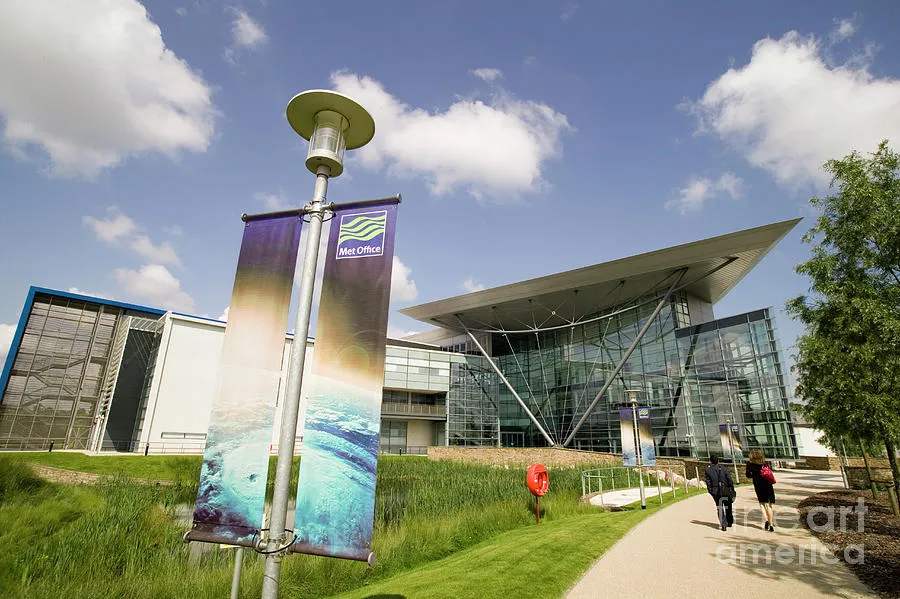 Photo: Meteorological Office, via images.fineartamerica.com
The problem was everything above ground level. The atmosphere is not a flat, uniform thing. Weather is made in three dimensions, and the processes that generate storms, determine rainfall, and drive the jet stream happen thousands of metres above the nearest weather station. Without data from altitude, meteorologists were essentially trying to understand a building by examining only the floor.
Balloons offered one solution, but they were expensive, difficult to control, and limited in their ability to take sustained readings at a fixed altitude. Kites, by contrast, were cheap, reusable, and — in the right conditions — capable of holding instruments steady at altitude for hours at a time. They were also, unfortunately, associated in the public imagination primarily with children's entertainment, which did their scientific credibility no favours whatsoever.
The Men With the String
The British kite meteorologists of the late nineteenth and early twentieth centuries were a gloriously varied bunch. Some were professional scientists working at the fringes of institutional acceptance. Others were gifted amateurs — schoolteachers, clergymen, a retired naval officer or two — who had read about American and German kite-flying experiments and decided to try their luck on British clifftops.
E.D. Archibald, working in the 1880s, was among the first to use kites systematically for meteorological observation in Britain, attaching recording instruments to his kite lines and publishing results that his contemporaries received with polite scepticism. William Henry Dines, a more formally credentialled figure, developed improved instruments for measuring upper-atmosphere conditions and spent years accumulating data that would later prove foundational to understanding the tropopause — the boundary between the lower and upper atmosphere that has enormous implications for aviation and climate science.
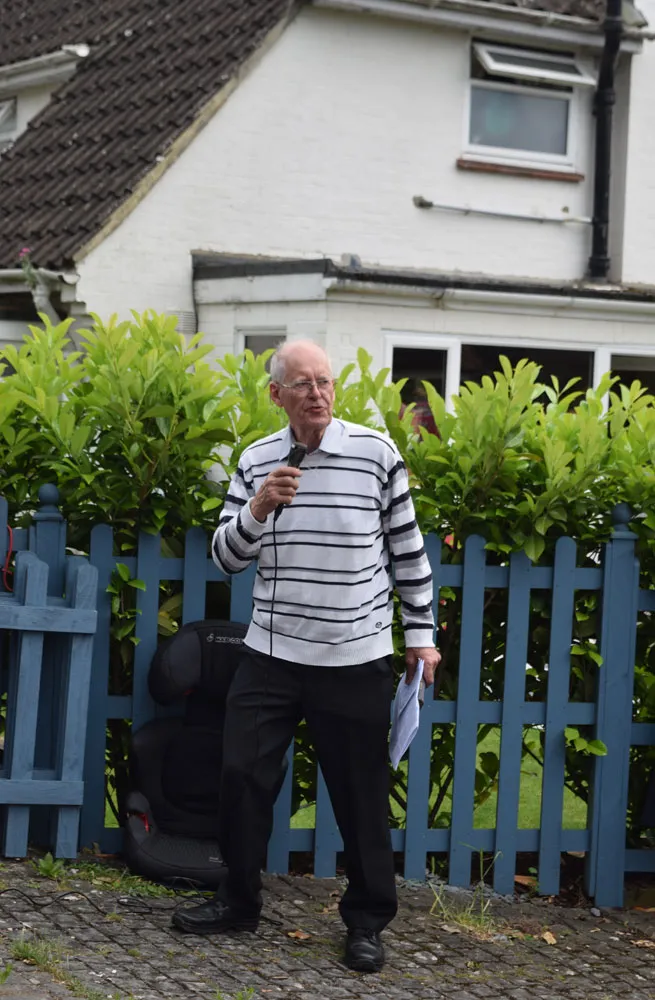 Photo: William Henry Dines, via oxonblueplaques.org.uk
What united these figures was a combination of methodological patience and an almost wilful indifference to professional opinion. They were collecting data because the data was there to be collected, regardless of whether anyone currently had a use for it. This is, in retrospect, exactly the right attitude for a scientist to have. At the time, it mostly got them excluded from the better dinner parties.
What the Data Said
The upper-atmosphere observations accumulated by British kite meteorologists through the 1880s, 90s, and into the early twentieth century told a story that surface measurements simply couldn't. Temperature didn't decrease uniformly with altitude, as many had assumed — it dropped sharply, then levelled off, then in some conditions actually increased. Wind patterns at altitude bore little resemblance to surface winds. Humidity behaved differently at different levels of the atmosphere in ways that had direct implications for cloud formation and precipitation.
This was not merely interesting. It was, eventually, essential. The understanding of atmospheric layering that emerged from these painstaking kite observations underpinned the development of the jet stream theory, which in turn became critical to both weather forecasting and aviation routing. The discovery that aircraft flying at high altitude would encounter dramatically different wind conditions from those predicted by surface observations — a discovery that kite data had been pointing toward for decades — saved lives and fuel once commercial aviation made it a practical concern.
The irony is thick enough to spread on toast: the data collected by men dismissed as eccentrics with too much string turned out to be exactly what aviation engineers urgently needed once powered flight became a reality.
Institutional Snobbery and Its Costs
It would be comfortable to treat this story purely as a triumph of the amateur spirit over institutional stuffiness. But there is a less comfortable element worth acknowledging: the delay caused by that institutional snobbery had real costs.
Had the upper-atmosphere data collected by British kite meteorologists been taken more seriously earlier, the development of systematic altitude meteorology might have advanced by a decade or more. The theoretical frameworks that eventually incorporated this data — frameworks that proved essential to understanding climate dynamics — might have emerged sooner. We cannot know precisely what difference that would have made, but the pattern of useful data sitting unexamined in obscure journals because the collection method seemed undignified is not a uniquely Victorian problem.
It raises an uncomfortable question that feels very relevant in 2024: what fringe observations are being collected right now, by people working outside the mainstream, that will turn out to be essential in thirty years' time? Climate science itself, in its early decades, was treated with some of the same polite dismissal that met the kite meteorologists. So were the first researchers to suggest that gut bacteria might influence mental health, or that sleep deprivation had measurable effects on cognitive function.
The track record of mainstream science on fringe data is, shall we say, mixed.
The Long Vindication
By the mid-twentieth century, the observations gathered by Britain's kite-flying weather watchers had been quietly absorbed into the mainstream. Radiosondes — instrument packages carried aloft by weather balloons — had replaced kites as the standard tool for upper-atmosphere measurement, but the conceptual framework those measurements fed into had been shaped, in no small part, by the data those earlier eccentrics had gathered on clifftops in Cornwall and from rooftops in London.
The men themselves were largely forgotten, their names appearing in footnotes if at all. The data survived them, which is perhaps the more important legacy.
There is something worth sitting with in that outcome. The kite meteorologists didn't need recognition to do the work. They needed piano wire, patience, and the unshakeable conviction that the atmosphere was worth understanding even if the Royal Meteorological Society wasn't currently interested. They flew their kites anyway, noted down what the instruments said, and trusted that the data would eventually find its purpose.
In the history of brilliant ideas, that kind of stubborn faith in the work itself — decoupled from the validation of the establishment — turns out to be rather more common than the official histories suggest. The genius, as ever, was in not waiting for permission.