Sorted: How Britain's Obsessive Victorian Postmasters Accidentally Wired the Modern World

Sorted: How Britain's Obsessive Victorian Postmasters Accidentally Wired the Modern World
There is something wonderfully British about the idea that one of the most transformative communication revolutions in history was quietly engineered by men in slightly ill-fitting uniforms, arguing over delivery routes in draughty sorting offices. No Silicon Valley fanfare. No venture capital. Just a stubborn desire to get the post there faster, more reliably, and — if at all possible — before the next district managed it first.
Yet that is more or less what happened. Long before fibre-optic cables snaked beneath our streets and before broadband became a political battleground, a loose, largely uncoordinated network of Victorian postmasters across Britain was doing something extraordinary. They were, without quite realising it, inventing the architecture of mass communication.
The Sorting Office as Laboratory
The Victorian Post Office was not, on the surface, an obvious cradle of genius. It was a bureaucratic institution, hierarchical and deeply suspicious of deviation from procedure. And yet, precisely because the stakes were so mundane — a parcel to Wolverhampton, a letter to Leith — its most restless employees felt free to experiment in ways that grander institutions might have stifled.
Postmaster General Rowland Hill's introduction of the Uniform Penny Post in 1840 had already done something radical: it democratised communication. Suddenly, volume exploded. And with volume came chaos. Local postmasters, faced with mountains of correspondence and chronically insufficient staff, had no choice but to innovate. How do you sort ten thousand letters in the time previously allocated to five hundred? How do you route a package through six intermediate offices without it vanishing entirely?
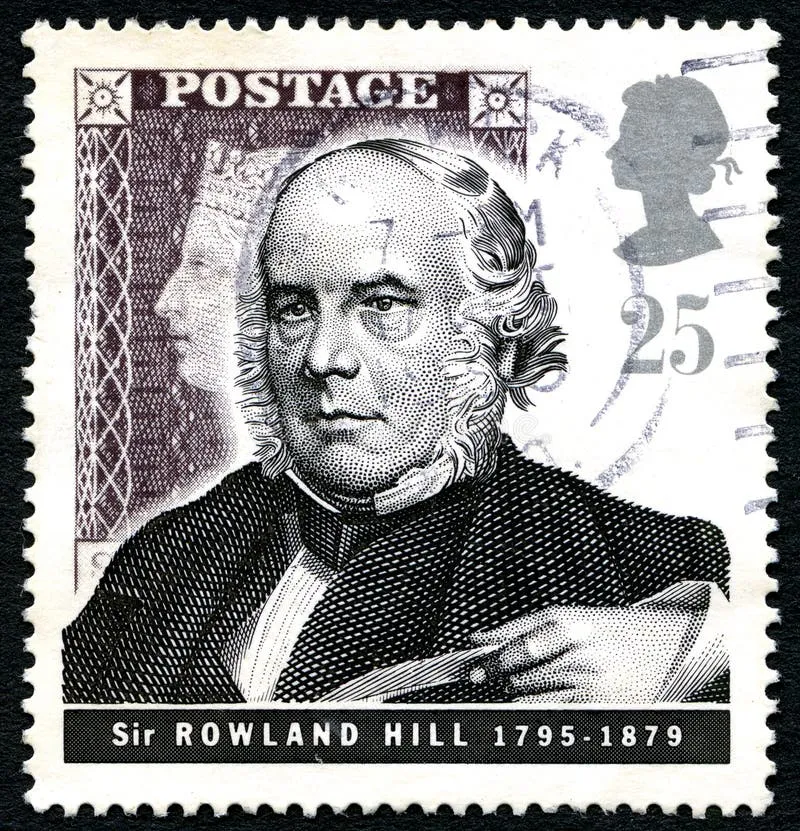 Photo: Rowland Hill, via thumbs.dreamstime.com
The answers they devised — hub-and-spoke routing, priority flagging, zonal batching — were not written up in academic journals. They were scrawled in the margins of internal ledgers, passed between offices by word of mouth, occasionally published in obscure postal trade circulars that nobody outside the sorting room ever read. But they were genuinely new ideas. And they were working.
Rivalries That Sparked Revolutions
One of the more entertaining engines of innovation was inter-office competition. The Victorian postal service was, in theory, a unified national institution. In practice, it was a collection of fiercely territorial local empires, each convinced that the next district was doing it wrong.
This rivalry had an unexpected upside. Postmasters competing to demonstrate superior throughput times were essentially running continuous efficiency experiments. A postmaster in Birmingham who devised a more effective batching system had every incentive to keep it quiet from his counterpart in Bristol — which meant Bristol, facing the same problems independently, often arrived at a different but equally interesting solution. The result was a kind of parallel innovation engine, distributed across the country, producing a remarkable diversity of approaches to the same fundamental challenge: how do you move information reliably through a complex network?
Sound familiar? It should. The logic underpinning those Victorian sorting wars is not entirely unlike the distributed packet-switching principles that would eventually define the internet.
The Margin Scribblers
Some of the most intriguing innovations came not from grand schemes but from the kind of restless annotation that fills the margins of any document handled by someone who can't quite switch their brain off.
Several surviving postal ledgers from the 1860s and 1870s — held in the British Postal Museum's archive in London — contain routing diagrams of surprising sophistication. One postmaster in the East Midlands sketched what appears to be a rudimentary network map, with nodes and weighted connections, trying to calculate the most efficient path for a parcel through multiple relay offices. He had no graph theory. He had no mathematics beyond basic arithmetic. He was just trying to stop things getting lost in Nottingham. And yet the diagram he produced bears a striking conceptual resemblance to the kind of network optimisation models that computer scientists would formalise a century later.
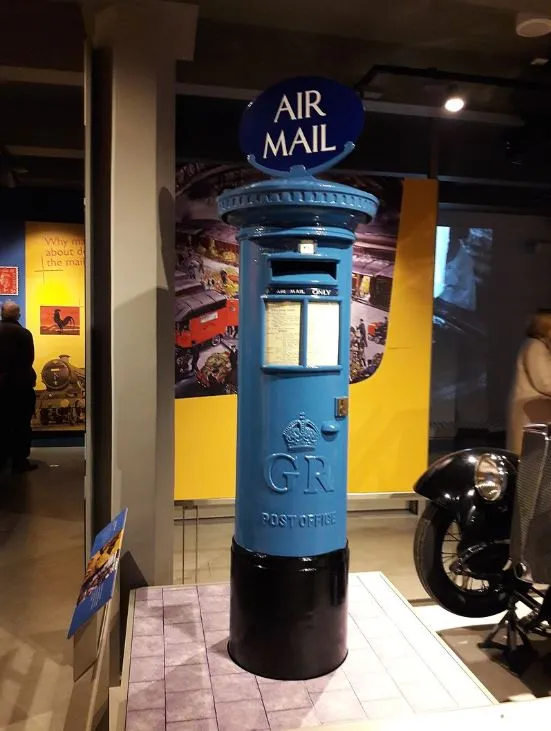 Photo: British Postal Museum, via editions.covecollective.org
These weren't isolated cases. The margins of Victorian postal administration are littered with small acts of intellectual bravery — men quietly solving problems that nobody had yet given names to.
From Post to Telegraph: The Unexpected Handshake
When the telegraph network began to expand seriously across Britain in the 1850s and 60s, and when the Post Office absorbed the telegraph companies in 1870, something interesting happened. The engineers designing telegraph relay systems found themselves wrestling with problems that experienced postmasters recognised immediately. How do you prioritise competing signals? How do you manage congestion at central relay points? How do you ensure a message reaches its destination when one route is unavailable?
The institutional knowledge embedded in the postal service — informal, undocumented, but very real — quietly fed into the design of telegraph infrastructure. Some postmasters moved directly into telegraph operations management. Others consulted informally. The ideas migrated, even if the credit rarely followed.
The same pattern repeated itself as telephone exchanges began to proliferate in the 1880s and 90s. The logic of routing, switching, and load management that telephone engineers were developing from first principles had, in many cases, already been worked through — imperfectly, intuitively, but genuinely — by men whose biggest concern had previously been getting the morning post to Shropshire on time.
What the Uniform Concealed
There is a broader point lurking here, and it's one that The Genius Wave finds irresistible: institutional mavericks are almost always invisible until history decides to look back and squint.
The Victorian postmasters who quietly engineered these innovations were not celebrated as visionaries. They were, by definition, people doing a job that society considered entirely unremarkable. The uniform, in a sense, made them disappear. It signalled competence and reliability rather than creativity. Nobody expected the man sorting letters in a back-street sorting office to be rethinking the fundamental architecture of networked communication.
And that invisibility was, paradoxically, what gave them the freedom to do it. When nobody is watching for genius, genius has nowhere particular to perform. It just gets on with solving the problem in front of it.
The next time a broadband engineer talks about network resilience, or a logistics algorithm optimises a delivery route, it's worth pausing for a moment to think about a postmaster in Victorian Birmingham, scribbling a diagram in the margin of a ledger, trying to stop a parcel getting lost. He didn't know he was inventing anything. He was just trying to do his job a little better than the bloke in Bristol.
That, in the end, is how most of the modern world got built.